40L vs 60L vs 70L Backpack: How Much Capacity Do You Actually Need?
Most first-time backpack buyers make the same mistake: they go too big. Whatever space you have, you'll fill it — and filling a 70L pack feels very different from filling a 40L.
Key Takeaways
- What Does '40 Liters' Actually Mean?: Liters measure internal volume — how much gear you can physically fit inside.
- The Trap: Bigger Packs Make You Pack More: Here's what nobody talks about enough: pack size changes your packing behavior.
- The 60L Sweet Spot: For the majority of backpackers doing 3–7 day trips in 3-season conditions, 55–65L is genuinely the right range.
Most first-time backpack buyers make the same mistake: they go too big.
The logic seems sound — more space means more options, right? But in practice, a bigger backpack means a heavier pack, and a heavier pack means a worse experience on every single mile. Packs don't come with volume limits. Whatever space you have, you'll fill it. And filling a 70L pack feels very different from filling a 40L.
Here's how to actually match your pack to your trip.
The Quick Guide
| 40L | 60L | 70L+ | |
|---|---|---|---|
| Best For | Overnight to 3-day, ultralight style | 3–7 day trips, moderate gear | 7+ days, winter, heavy carries |
| Typical Pack Weight (full) | 20–30 lbs | 30–45 lbs | 45–60+ lbs |
| Who It's For | Minimalists, experienced backpackers | Most weekend and week-long backpackers | Expedition, winter, family carries |
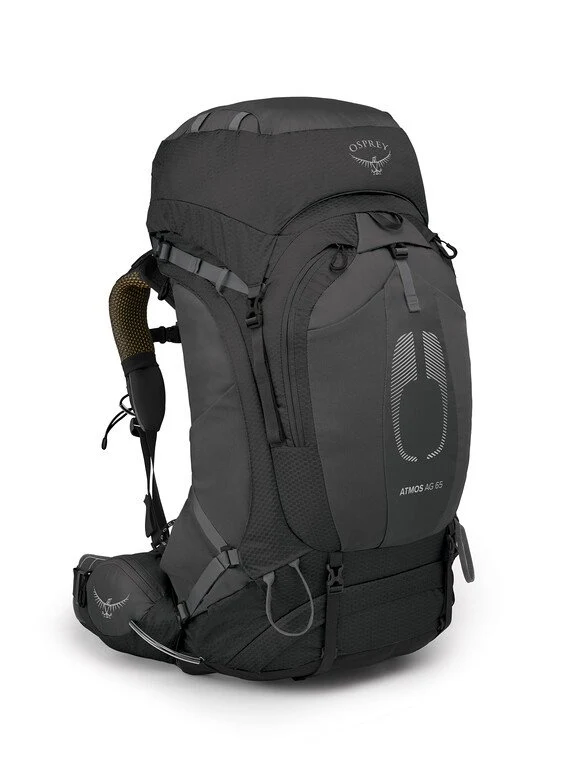
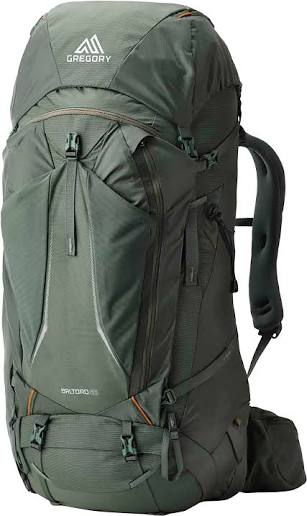
| Example Packs | Osprey Exos 38, REI Flash 45 | Osprey Atmos 65, Gregory Baltoro 65 | Osprey Aether 70, Gregory Baltoro 75 |
What Does '40 Liters' Actually Mean?
Liters measure internal volume — how much gear you can physically fit inside. 40 liters is roughly 2,440 cubic inches. It sounds like a lot until you try to fit a sleeping bag, sleeping pad, tent, 3 days of food, a cook kit, layers, and rain gear into it.
40L: A 3-season sleeping bag, ultralight pad, small tent or tarp, 3–4 days of food, cook kit, layers, and rain jacket. Doable — but only if your gear is reasonably lightweight.
60L: Everything above, plus more food (5–7 days), a larger tent, heavier sleeping bag for colder conditions, camera gear, extra layers, and some creature comforts. This is the sweet spot for most weekend-to-week-long trips.
70L+: Winter camping gear, extended resupply sections with 7+ days of food, group gear, or expedition-style carries.
The Trap: Bigger Packs Make You Pack More
Here's what nobody talks about enough: pack size changes your packing behavior.
A 40L pack forces discipline. When you can see that your sleeping bag alone takes up a quarter of your space, you start making smart trade-offs. You leave the cast iron skillet behind. You bring two shirts instead of four.
A 70L pack lets you rationalize everything. "There's room for it" becomes the deciding factor. The result is a 50 lb pack that punishes you on every climb.
Experienced backpackers consistently recommend sizing down rather than up, especially for your first pack. A slightly undersized pack that forces good decisions is better than an oversized pack that enables bad ones.
The 60L Sweet Spot
For the majority of backpackers doing 3–7 day trips in 3-season conditions, 55–65L is genuinely the right range. It's large enough to carry all your gear and 4–6 days of food without creative compression gymnastics. It's small enough that you won't unconsciously overpack.
The Osprey Atmos 65 and Gregory Baltoro 65 are both in this range and consistently rated among the best backpacking packs available. This volume range has been optimized by decades of design for the most common backpacking use case.
When Does 70L Make Sense?
Three clear scenarios:
Winter and 4-season camping. A winter sleeping bag is bulkier and heavier. An insulated sleeping pad takes more volume. A 4-season tent takes more space. You'll genuinely need 65–75L.
Extended sections without resupply. A 10-day carry requires roughly 2–2.5 lbs of food per day — that's 20–25 extra pounds of food alone.
Carrying extra for others. If you're hiking with less experienced partners or taking on shared gear (tent, cook kit, group food), you may push into 70L territory.
Frame and Fit: More Important Than Volume
Here's what most buyers underestimate: a well-fitting 60L pack carrying 40 lbs will feel dramatically better than a poorly fitting 70L carrying the same weight.
Torso length (not your height) determines what size pack you need. Most packs come in S/M/L sizes calibrated to torso length — get measured at a gear store before buying. The hip belt should sit on your iliac crest, and 70–80% of the pack weight should transfer to your hips, not your shoulders.
When in doubt, go with 60–65L. It's the sweet spot that works for 80% of backpacking scenarios. Browse our full lineup of hiking backpacks to find the right fit.
Products We Recommend
Written by
Sarah Chen
Gear Analyst & Writer · Trailwise Gear
Sports science graduate with a background in biomechanics. Brings data-driven analysis to gear testing — quantifying comfort, weight distribution, and material performance.
Ultramarathon Runner · Alpine Mountaineer
Meet the full team →You Might Also Like
Find the Best Gear
Browse our expert-ranked gear categories.