Osprey Atmos AG 65 vs Gregory Baltoro 65: Which Hiking Backpack Is Right for You?
Two of the most recommended hiking backpacks on the market — but they're not the same pack. Here's exactly which one is right for how you actually hike.
Key Takeaways
- The Osprey Atmos AG 65: The One Everyone Talks About at the Trailhead: There's a reason people stop mid-hike to ask "what's that pack?" when you're wearing the Atmos.
- What Makes the Anti-Gravity System Special: The AG in the name stands for Anti-Gravity — and it's not just marketing hype.
- Organization That Actually Makes Sense: Eight external pockets.
You're standing in REI, a pack on each shoulder, bouncing up and down like you're about to audition for a hiking gear commercial. The sales rep is watching. You're sweating. And you still can't decide.
Been there.
The Osprey Atmos AG 65 and the Gregory Baltoro 65 are two of the most recommended hiking backpacks on the market — and for good reason. They've both been trail-tested by hundreds of thousands of hikers, they both carry big loads with surprising comfort, and they're both priced in a way that makes your credit card gently weep.
But they're not the same pack. Not even close.
One is built for the hiker who sweats like a furnace and prioritizes that "floating on air" carry feel. The other is built for the person who packs like they're preparing for a small apocalypse and needs every gram firmly planted on their hips.
So which one wins? That depends entirely on who you are on the trail. Let's break it down.
Quick Stats: Osprey Atmos AG 65 vs Gregory Baltoro 65
| Spec | Osprey Atmos AG 65 | Gregory Baltoro 65 |
|---|---|---|
| Weight | ~4 lbs 9 oz | ~4 lbs 11 oz |
| Capacity | 65L | 65L |
| Max Load | ~40 lbs | ~50 lbs |
| Back System | Anti-Gravity suspended mesh | A3 foam panel + FreeFloat suspension |
| Rain Cover | Included | Included |
| Sizes | S, M, L | S, M, L |
| Price | ~$270–$290 | ~$300–$370 |
The Osprey Atmos AG 65: The One Everyone Talks About at the Trailhead
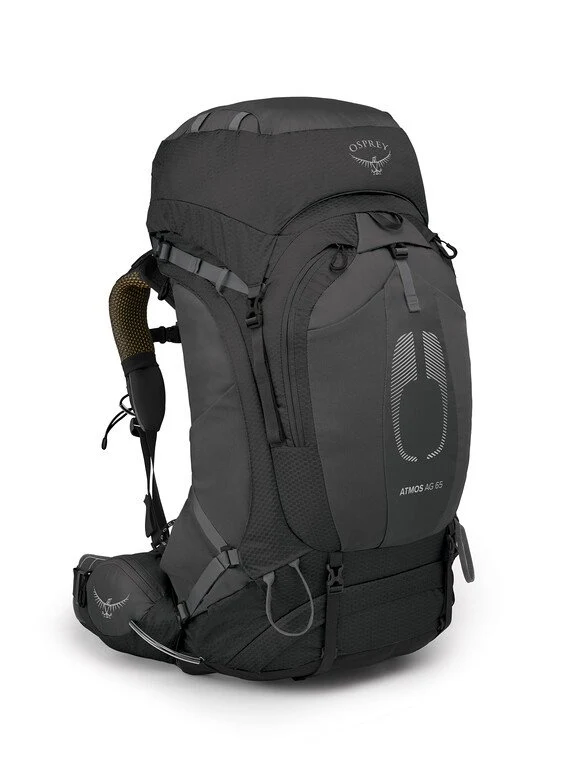
There's a reason people stop mid-hike to ask "what's that pack?" when you're wearing the Atmos. The mesh back panel looks like it belongs in a NASA prototype. And honestly? It kind of does.
What Makes the Anti-Gravity System Special
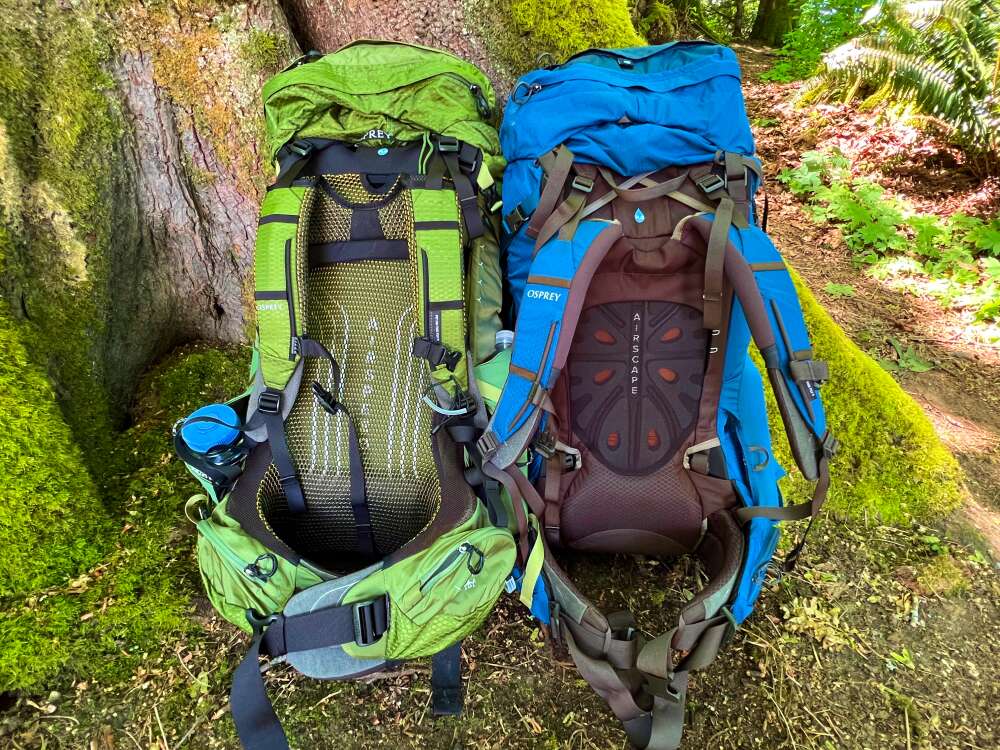
The AG in the name stands for Anti-Gravity — and it's not just marketing hype. The system uses a continuous tensioned mesh panel that runs from the top of the shoulder yoke all the way down into the hipbelt. It's essentially a trampoline strapped to your back.
What that means on the trail: the pack never actually touches your back. There's a gap of airflow between you and the load at all times. On a humid August day in Algonquin Park, that's the difference between finishing a 15-km day feeling human and finishing it feeling like you swam the route.
The load distribution is equally impressive. The mesh wraps around your hips too, so the weight feels grounded — not dragging you backward.
The sweet spot for the Atmos is loads between 25 and 40 lbs. That's your classic 3–5 day backpacking trip with modern, reasonably lightweight gear. In that range, this pack performs like nothing else at this price point.
Organization That Actually Makes Sense
Eight external pockets. Yes, eight. And they're all usable — not those tiny afterthoughts that barely fit a granola bar.
The dual zippered hipbelt pockets fit your phone, snacks, and sunscreen without requiring you to stop walking. The two large side zippers give you direct access to the main compartment without digging through the top. The stow-on-the-go trekking pole attachment on the left shoulder strap is one of those features you don't know you need until you're scrambling a boulder field with poles flopping around your wrists.
The floating top lid also detaches if you want to shave some weight and go minimal on summit days.
Where the Atmos Falls Short
Push this pack past 40 lbs and you'll start to notice the tradeoff. The mesh hipbelt, while brilliant for airflow and feel, doesn't have the rigid, dense foam structure of a purpose-built load-hauler. A few long-distance hikers have noted that the hipbelt loses a bit of its "hug" on big mileage days with truly heavy loads — particularly when you're hauling in extra water for dry campsites.
It's also worth noting: the Atmos doesn't come with a true daypack option. If you're base camping and want to do summit pushes, you're either bringing a separate packable daypack or improvising.
The Gregory Baltoro 65: The One That Just Carries
If the Atmos is a sports car, the Baltoro is a pickup truck. It's not flashy. It doesn't float. But when you're hauling 45 lbs across three days of West Coast Trail mud, roots, and ladders, it just... handles it.
Built to Haul Heavy Loads
The Baltoro's A3 suspension system — which stands for Automatic Angle Adjust — allows the hipbelt and shoulder harness to pivot independently as you move. It doesn't just sit on your body; it moves with your body geometry. That's huge on uneven terrain where most packs start shifting and fighting you.
The frame is also beefier than the Atmos — a steel frame and fiberglass stay that's engineered to distribute up to 50 lbs without the hipbelt foam compressing into uselessness. For base campers, photographers hauling tripods, or anyone who refuses to leave the cast iron skillet behind, this is significant.
Organization Overload (In a Good Way)
Nine exterior pockets, a U-shaped front zipper that lays the main compartment wide open, a sleeping bag hatch at the bottom, and a hydration sleeve that can function as a basic summit pack. The front panel access alone is a game changer — you can get to gear buried deep in the main compartment without emptying the whole thing.
The top lid has three compartments: one small top pocket for quick-access essentials (headlamp, compass, phone), one large pocket for layers and snacks, and a pocket on the underside for valuables and toiletries. It's the kind of organization that turns "where the heck is my headlamp" camp chaos into a calm, five-second retrieval.
One thing worth noting on the newer Baltoro model: the old removable daypack has been replaced with a hydration sleeve that has thin shoulder straps for light use. It works in a pinch — adequate for a 10-mile base camp day hike with a rain shell and a Nalgene — but if you're doing serious summit pushes, bring your own lightweight daypack.
The Baltoro's One Big Disadvantage: Your Back
The Baltoro uses a formed foam back panel with Gregory's Matrix Ventilation. It's a significant improvement over older models in terms of breathability. But it's not the Atmos.
On warm days with a full pack, your back will sweat. Even with the mesh backing working as intended, there's a noticeable difference when switching from an Osprey Anti-Gravity system. If you hike in humid conditions, through June in the boreal forest, or on sun-exposed ridgelines, this matters more than you think.
Head-to-Head: The Deciding Factors
Ventilation — Winner: Osprey Atmos AG 65 (and it's not close)
The suspended trampoline mesh on the Atmos allows air to flow freely across your entire back and into the hipbelt. It's legitimately the best back ventilation system on the market in this price range. If you run hot, hike in summer, or simply hate arriving at camp looking like you backstroke through a lake — the Atmos wins this category every single time.
Heavy Load Carrying — Winner: Gregory Baltoro 65
The Baltoro is rated to 50 lbs vs. the Atmos's ~40 lb sweet spot. The stiff foam padding and A3 suspension hold up better under serious weight over serious distance. Once you're consistently packing 40+ lbs — think winter camping gear, international trekking, or photography kit — the Baltoro's foam-forward design edges out the Atmos's mesh.
Organization — Winner: Draw
Both packs have excellent pocket layouts. The Atmos wins on external accessibility and that brilliant trekking pole attachment. The Baltoro wins on main compartment access and the sheer number of organizational compartments in the lid.
Weight — Winner: Osprey Atmos AG 65 (barely)
The Atmos comes in roughly 2–3 oz lighter depending on size. Honestly, this is negligible over a week on trail. Don't let this be your deciding factor.
Fit and Sizing — Winner: Tie
Both packs come in S/M/L and offer torso length adjustment. Pro tip for both: get professionally fitted in-store before buying. A 2-inch torso measurement mistake turns a great pack into a miserable one.
Price — Winner: Osprey Atmos AG 65
The Atmos typically runs $270–$290. The Baltoro comes in at $300–$370 depending on the retailer. Both are worth every dollar for serious backpackers. But if you're on a tighter budget, the Atmos delivers slightly more value per dollar.
Is the Osprey Atmos AG 65 Good for Beginners?
Yes — and it might actually be the best first serious backpacking pack you can buy.
It's intuitive to adjust, forgiving in terms of fit, and the comfort margin is so high that even if your pack weight creeps up on an early trip (and it will), you're less likely to have a miserable first experience. The Atmos has a cult-like following for a reason: it converts people who thought backpacking was supposed to hurt.
If you're just getting into multi-day hiking, planning your first backcountry trip, or upgrading from a basic $80 department store pack — start with the Atmos.
Is the Gregory Baltoro 65 Worth the Extra Money?
For a specific type of hiker, absolutely.
If you're consistently hauling 40+ lbs, doing remote multi-week expeditions, base camping with heavy camera or fishing gear, or you just know from experience that you're a heavy packer who can't leave comfort items behind — the Baltoro earns every extra dollar. The build quality is bomber. Owners report using these packs for 5+ years and 1,000+ miles with nothing more than occasional zipper maintenance covered under Gregory's lifetime guarantee.
The Baltoro is also the better choice if you tend to be hard on gear. The 630D nylon base and reinforced construction handle rough terrain, rocky landings, and baggage handlers with more confidence than the Atmos's lighter material set.
The Bottom Line: Which Pack Should You Buy?
Here's the simple version.
Buy the [Osprey Atmos AG 65](/categories/hiking-backpacks) if:
- You hike in warm or humid conditions
- Your typical load is 25–40 lbs
- You prioritize ventilation and that "floating" carry feel
- You're a beginner looking for a forgiving, comfortable first serious pack
- Budget is a consideration
Buy the [Gregory Baltoro 65](/categories/hiking-backpacks) if:
- You regularly carry 40–50 lbs
- You base camp and need maximum organization
- You hike in cooler climates where back sweat isn't your enemy
- You want a bulletproof pack built to survive a decade of hard use
- You want front panel access to your main compartment
Both packs come backed by lifetime warranties. Both are legitimately excellent choices. And both will outlast most of the gear you put inside them.
The real question isn't "which pack is better" — it's "which pack is better for you." Read that list above, be honest about how you actually hike, and you'll land in the right place.
Ready to gear up? Browse our full hiking backpacks rankings, or check out our guide on how to choose the right backpack and what to wear hiking in every season.
Products We Recommend
Written by
Marcus Osei
Founder & Lead Reviewer · Trailwise Gear
Former wilderness guide with 15 years of expedition experience across Patagonia, the Rockies, and the Himalayas. Has personally tested over 400 pieces of gear in the field.
PCT Section Hiker · Appalachian Trail Thru-Hiker
Meet the full team →
Find the Best Gear
Browse our expert-ranked gear categories.