Rain Jacket vs Softshell: Which Should You Pack?
Most hikers default to 'rain jacket = rain protection' without understanding what a softshell brings. For a lot of hiking conditions, a softshell might actually be the smarter layer.
Key Takeaways
- What's Actually Different?: Rain jackets (also called hardshells) use fully waterproof-breathable membranes — Gore-Tex, H2No, AscentShell — with fully taped seams and a DWR outer finish.
- The Softshell Advantage: Breathability and Feel: If you've ever hiked hard uphill in a rain jacket and arrived at camp damp from sweat despite staying dry from the rain, you've experienced the breathability limitation of hardshells.
- When You Need a Rain Jacket: Some conditions demand waterproofing.
- When a Softshell Is the Better Choice: The Pacific Northwest trail runner who spends hours in light drizzle at high effort is often better served by a softshell than a rain jacket.
Here's a question that doesn't get asked enough: do you actually need a rain jacket, or would a softshell serve you better?
Most hikers default to "rain jacket = rain protection" without really understanding what a softshell brings to the table. For a significant portion of hiking conditions — cool, damp, breezy days that aren't actually raining hard — a softshell might be the smarter layer. And for some hikers, a softshell replaces three separate layers.
Here's the honest breakdown.
What's Actually Different?
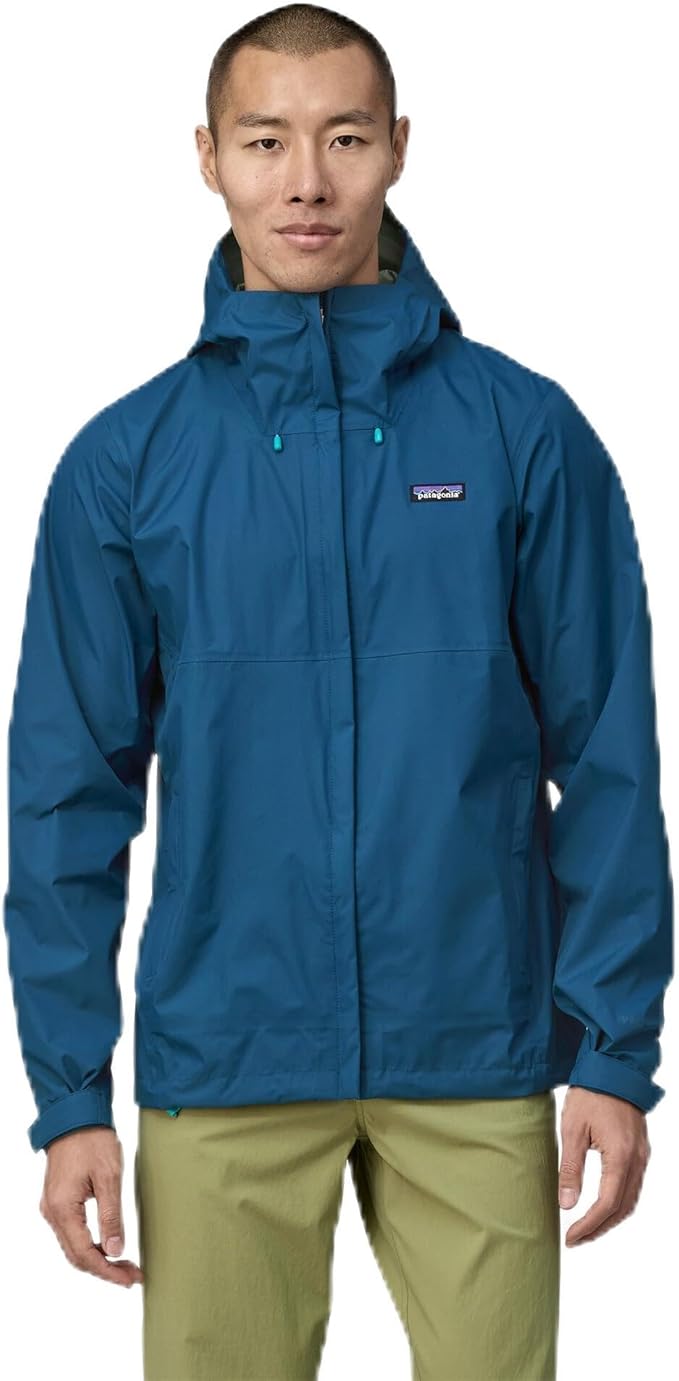
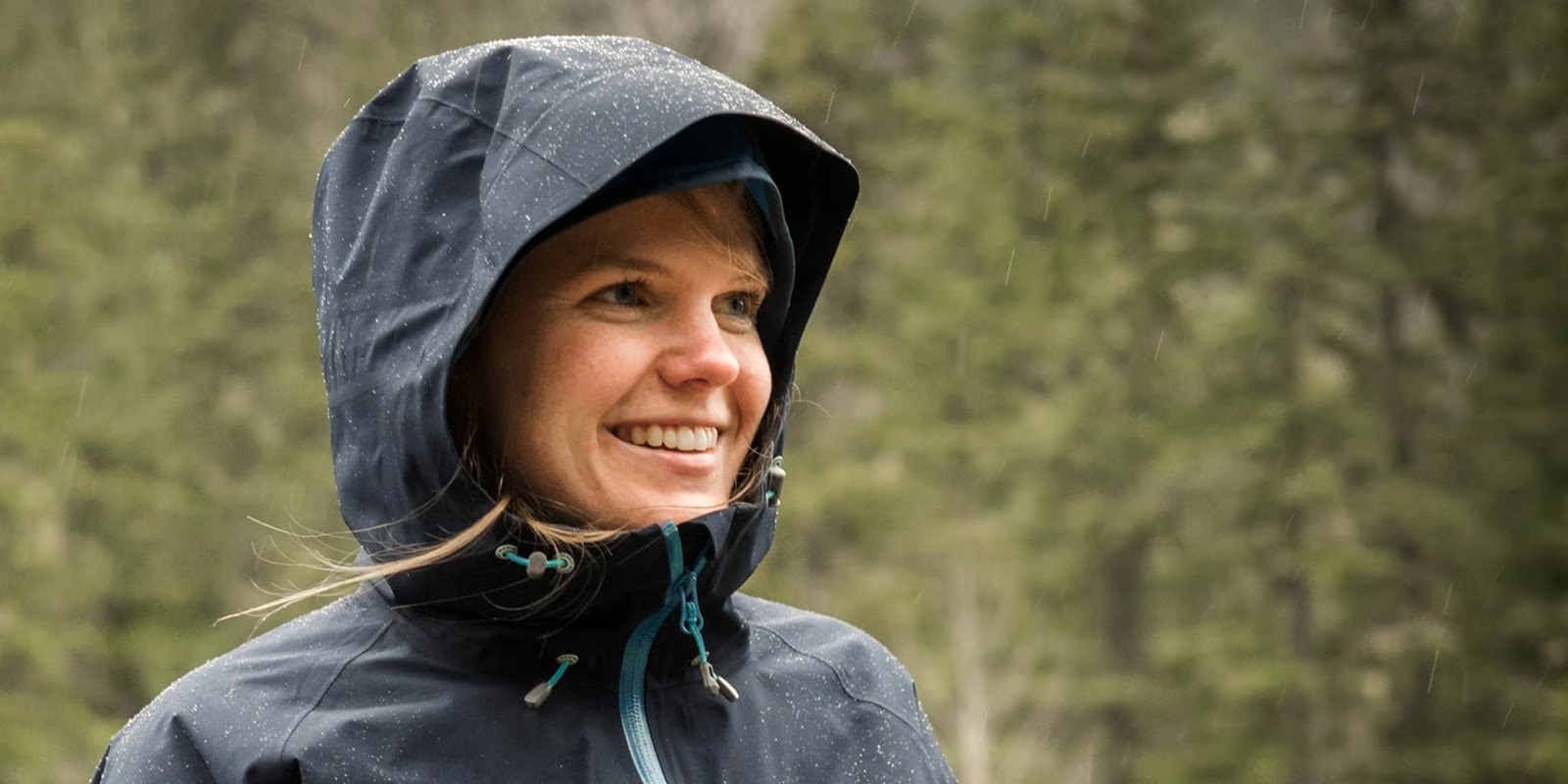
Rain jackets (also called hardshells) use fully waterproof-breathable membranes — Gore-Tex, H2No, AscentShell — with fully taped seams and a DWR outer finish. They're engineered to keep liquid water out in sustained precipitation. The trade-off: they breathe less well than softshells and feel stiffer and crinklier against the body.
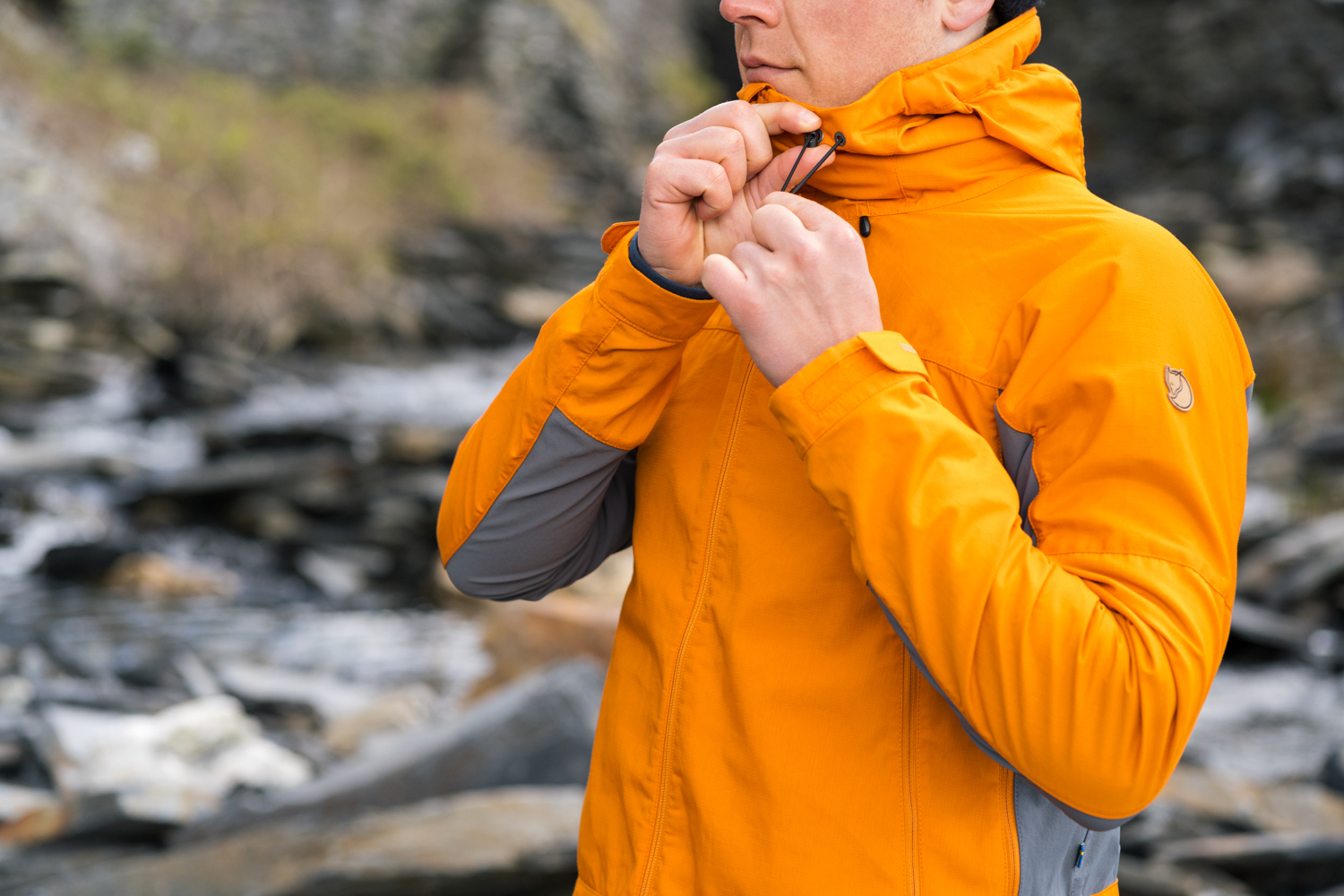
Softshells use stretch-woven fabrics with a water-resistant (but not waterproof) treatment. They breathe exceptionally well, feel like athletic apparel, move with your body, and provide mild to moderate weather resistance. The trade-off: in real sustained rain, they saturate and you get wet.
Neither is universally better. They're different tools for different conditions.
The Softshell Advantage: Breathability and Feel
If you've ever hiked hard uphill in a rain jacket and arrived at camp damp from sweat despite staying dry from the rain, you've experienced the breathability limitation of hardshells. All waterproof membranes restrict airflow to some degree — that's the nature of keeping water out.
Softshells breathe like athletic wear because they are athletic wear — stretch-woven fabrics with large fiber structures that allow significant air exchange. On a cool, windy, 50°F day that might produce light drizzle but isn't a downpour, a softshell keeps you warmer and drier (from sweat) than a rain jacket would.
Softshells also work as a mid-layer. Many softshells are worn directly over a base layer in 3-season conditions while being breathable enough not to overheat on aerobic hikes. The layering system guide covers exactly how to build around a softshell or hardshell as your outer layer.
When You Need a Rain Jacket
Some conditions demand waterproofing. A saturated softshell in 40°F rain with wind is a recipe for cold, misery, and in serious conditions, hypothermia risk.
- Hiking in sustained rainfall (more than 30 minutes of real rain)
- Cold + wet conditions (below 10°C/50°F with precipitation)
- Exposed alpine terrain where weather can rapidly deteriorate
- Multi-hour stretches in rain without shelter options
- Water crossings or hiking through consistently wet vegetation
When a Softshell Is the Better Choice
The Pacific Northwest trail runner who spends hours in light drizzle at high effort is often better served by a softshell than a rain jacket. The wetness from sweat in a hardshell can exceed the wetness from drizzle penetrating a softshell.
- Conditions are cool and breezy but not actively raining
- High-output aerobic hiking where breathability matters more than full waterproofing
- You want a versatile single layer that also works as a mid-layer and wind layer
- Shoulder seasons with light precipitation
- You want a hiking jacket that works in trail towns too
Should You Carry Both?
For backpacking trips in variable mountain weather: yes, ideally. The classic 3-season system is a base layer, mid-layer insulation, softshell for aerobic hiking, and rain jacket for actual storms. You won't wear all four at once — but having both gives you complete coverage without being swamped in a hardshell all day.
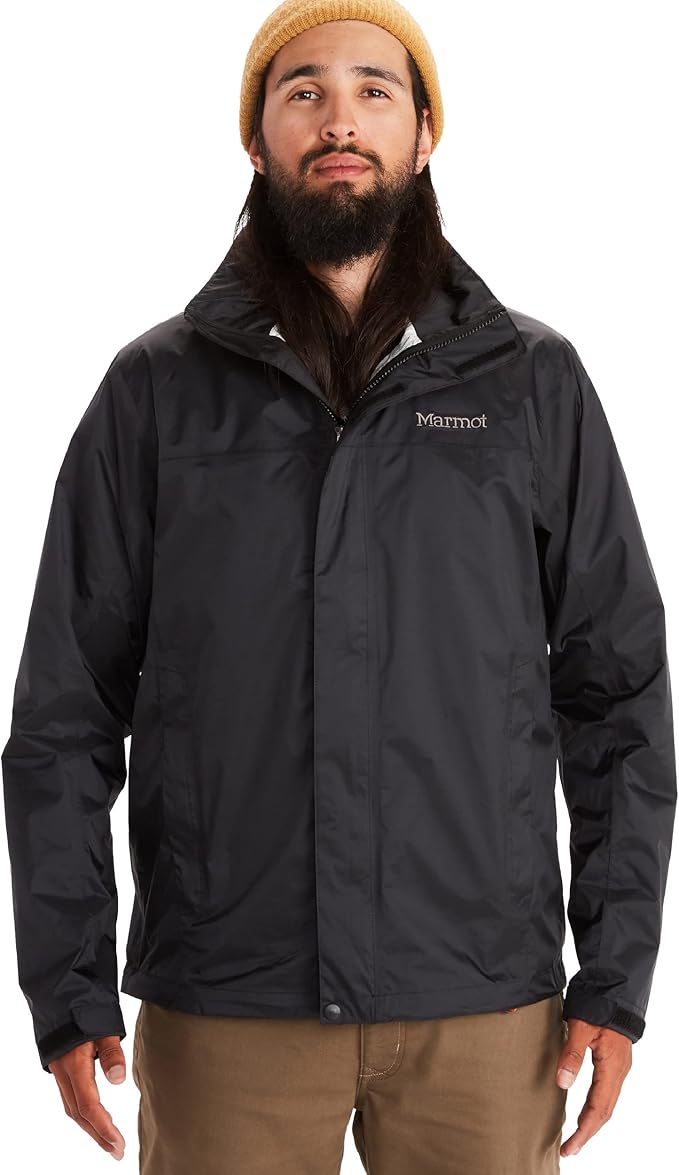
For lighter day hiking, many hikers get away with just a packable rain jacket. Options like the Marmot PreCip Eco at 8.6 oz are easy trail insurance. Browse rain gear to compare hardshells and softshells side by side.
The Bottom Line
If you're buying one layer for variable weather hiking and can only choose one:
Choose rain jacket if your hiking is unpredictable and you want one layer that handles everything from light breeze to downpour, even if it breathes less than ideal.
Choose softshell if you hike in conditions that are typically cool and breezy but rarely involve hard sustained rain, and you prioritize comfort and breathability.
If you hike in real mountain conditions where weather can rapidly change — Pacific Northwest, Colorado Rockies, Scottish Highlands, Appalachians in spring — own both.
Products We Recommend
Written by
Sarah Chen
Gear Analyst & Writer · Trailwise Gear
Sports science graduate with a background in biomechanics. Brings data-driven analysis to gear testing — quantifying comfort, weight distribution, and material performance.
Ultramarathon Runner · Alpine Mountaineer
Meet the full team →You Might Also Like

Find the Best Gear
Browse our expert-ranked gear categories.