Trail Shoes vs. Hiking Boots: What Nobody Tells You
Most footwear guides tell you what to choose but skip the part that actually matters — the myths, the counterintuitive truths, and the honest breakdown experienced hikers figured out the hard way.
Key Takeaways
- The Biggest Lie in Hiking: "Boots Protect Your Ankles": Let's start here, because this is the one that's been sending people down the wrong path for decades.
- The Waterproof Boot Trap (Nobody Warns You About This): Here's another one that gets people.
- Why "Waterproof" Isn't the Full Story: Waterproof membranes seal moisture out.
- So When Do You Actually Want Waterproof Boots?: Waterproof does make sense in specific situations.
You walk into REI, head straight to the footwear wall, and immediately get smacked in the face with a question you weren't ready for: boots or trail shoes?
The sales rep gives you the classic answer. "It depends." Thanks. Super helpful.
Here's the thing — most footwear guides online are telling you what to choose but skipping the part that actually matters: the stuff nobody says out loud. The myths that are still being repeated like gospel. The counterintuitive truths that experienced hikers figured out the hard way, after miles of wet socks and sore knees.
This is that guide. No fluff. Just the honest, trail-tested breakdown that'll actually help you make the right call.
The Biggest Lie in Hiking: "Boots Protect Your Ankles"
Let's start here, because this is the one that's been sending people down the wrong path for decades.
Walk into any outdoor store and you'll hear it: "You need high-top boots for ankle support." It sounds completely logical. More material around your ankle means more protection, right?
Not really.
Research published in the Journal of Athletic Training found no statistically significant difference in ankle sprain rates between hikers in high-top boots versus low-cut shoes. Sports medicine specialists have been saying the same thing for years — ankle stability comes primarily from the ligaments and muscles surrounding the joint, not from a piece of nylon wrapped around the outside.
In fact, there's a real argument that boots make things worse over time. When you rely on external support for years, the stabilizing muscles around your ankle don't get trained the same way. They weaken. So the day you wear trail shoes on a rocky descent — or the day a boot-wearing hiker hits an unexpected root — the unprepared ankle is actually more vulnerable.
Here's the real-world data: on the Appalachian Trail, 77% of thru-hikers started the trail in trail runners — and 87% wore them for the majority of the hike. Meanwhile, 12% started in boots, but that dropped to just 5% by the end. These are people covering 2,000+ miles on some of the rockiest, rootiest terrain in North America. They're not ditching boots because they're reckless. They're ditching them because they found trail shoes worked better.
That said — there are cases where ankle coverage genuinely helps: existing ankle injuries, loads over 40 lbs where balance shifts, and extremely technical off-trail terrain above treeline where you're scrambling on sharp rock. In those specific situations, a stiffer boot earns its place. But for the average 3–10 mile hike on maintained trail? The ankle support argument is mostly myth.
The real ankle protection is strong ankles. Balance exercises, calf raises, and single-leg stability work will do more for your ankles than any boot collar ever will.
The Waterproof Boot Trap (Nobody Warns You About This)
Here's another one that gets people. You're planning a fall hike in the Adirondacks. You buy waterproof Gore-Tex boots because obviously you want dry feet. Makes total sense.
Except three hours into the hike, your feet are soaked anyway — from the inside.
Why "Waterproof" Isn't the Full Story
Waterproof membranes seal moisture out. But they also trap moisture in. The sweat your feet generate during a hard climb has nowhere to go. On a warm day or a high-output hike, waterproof shoes can feel like wearing a plastic bag. The membrane does its job — and that job works against you when the primary threat isn't rain, it's your own body heat.
Non-waterproof shoes use mesh or fabrics with larger pores, meaning air flows much quicker and easier through the materials, speeding up drying. On the flip side, because of waterproof shoes' minimal airflow, water is more likely to remain in the fabric once it penetrates the liner.
There's also a dirty secret nobody advertises: waterproof liners fail. They're made of very thin membrane material that flexes thousands of times per hike, right at the toes and ball of foot. Dirt and sand work their way through the outer fabric and act like sandpaper on the membrane. Many experienced long-distance hikers actually prefer traditional mesh trail runners even in wet, rainy, and cold conditions — because waterproof shoes are much warmer and significantly less breathable than mesh, causing heat buildup and foot sweat that increases blister risk.
So When Do You Actually Want Waterproof Boots?
Waterproof does make sense in specific situations. Think: cold conditions (below 5°C / 40°F), snowy trails, shoulder-season hiking in the Pacific Northwest or Scottish Highlands where the trail is perpetually damp. When the risk isn't heat but cold wet feet, a waterproof boot with a good wool sock is the right call. GORE-TEX boots earn their place in cold shoulder seasons, spring melt, late fall rain, and hikes with dew-soaked grasses or brush that can saturate non-waterproof uppers quickly.
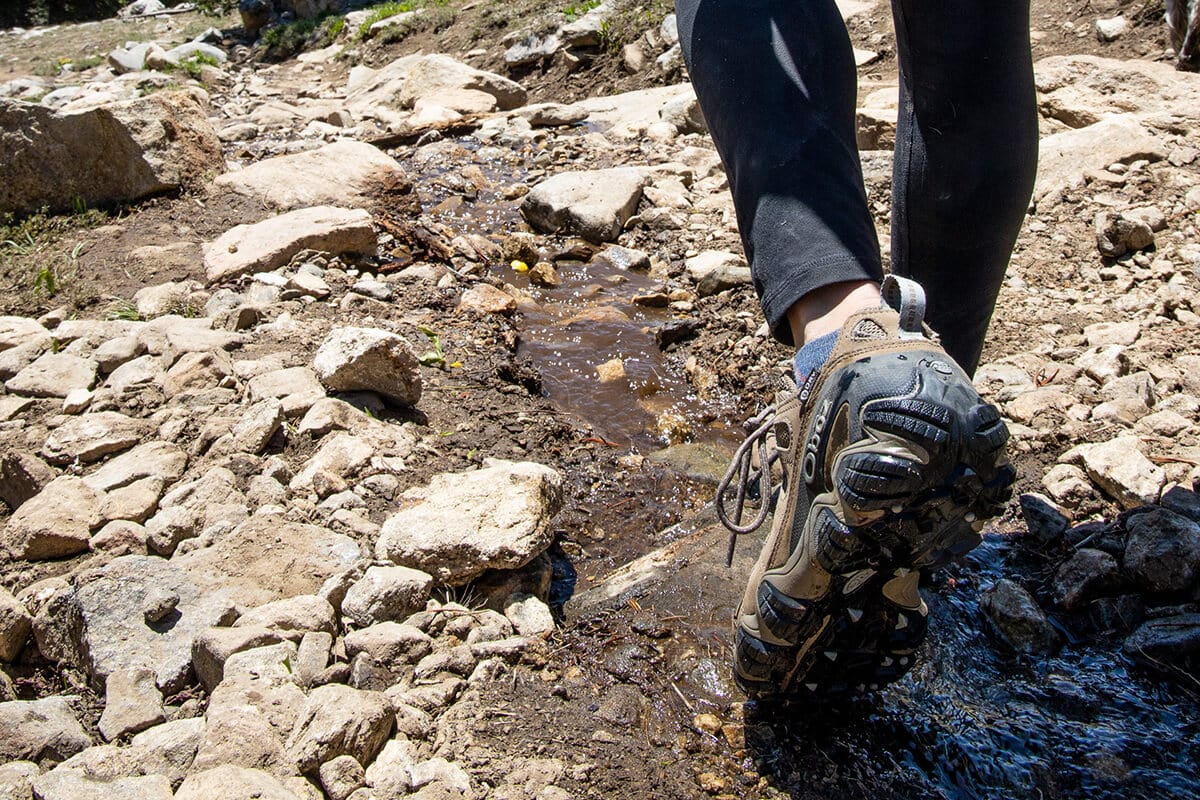
The counterintuitive rule: warm hike + water crossings → go non-waterproof. You'll get wet regardless, and mesh dries in hours. A waterproof boot that floods over the ankle will stay wet for days.
Weight: The Thing That Destroys You on Mile 8
Most people focus on pack weight. Smart. But shoe weight is arguably more important — and it's consistently underestimated.
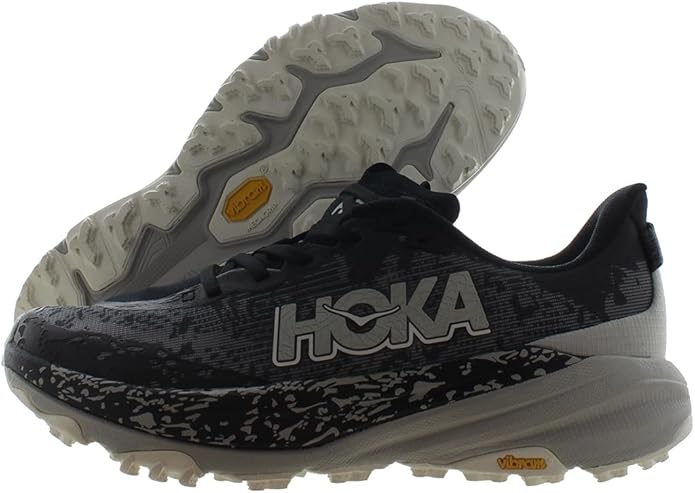
The average pair of hiking boots weighs well over 2 pounds, while most hiking shoes hover around 1.5 pounds for the pair. Meanwhile, the HOKA Speedgoat 6 clocks in at 1 pound 3.6 ounces for the men's version, despite having a max-cushion build.
That doesn't sound like much of a difference until you do the math. On a 10-mile day, you're taking roughly 20,000 steps. Every extra pound on your feet costs you the same energy as carrying an additional 5–6 pounds in your pack. The old mountaineer's saying isn't wrong: a pound on your feet is worth five on your back.
Trail runners don't just feel lighter at the trailhead. They feel lighter at mile 8 when your legs are burning and you've still got a 1,000-foot climb to camp. That's when shoe weight stops being a spec sheet number and becomes a physical sensation.
Does This Mean Boots Are Dead?
No. And this is where a lot of trail runner evangelists go too far.
Boots are genuinely the right tool for specific jobs. Here's when you should reach for them:
Heavy loads (40+ lbs). When you're carrying serious weight — think base camp mountaineering, winter camping, or packing in for a fishing trip — the stiffer midsole of a boot helps transfer the load through the foot more efficiently.
Cold and snow. Trail runners in January in the Rockies is a bad idea. Insulated, waterproof boots keep your feet warm and functional when trail runners would leave you with numb toes by noon.
Rocky, off-trail terrain above treeline. Scree fields, talus hopping, bushwhacking through dense brush — the toe protection and abrasion resistance of a proper boot matters here. Mesh uppers are vulnerable.
Post-injury recovery. If you've previously sprained an ankle or are dealing with a lower leg injury, a stiffer, higher boot provides compression and reduces the range of motion that could re-aggravate the injury while you're healing.
The Break-In Myth (and the Blister Reality)
One more thing nobody says clearly: trail runners don't need a break-in period. Boots usually do.
You know what happens when you wear a brand-new pair of stiff leather boots on a 15-km day hike? You find out exactly where the leather hits your heel. You discover a hot spot on your pinky toe you didn't know existed. You limp back to the car and spend two days recovering from blisters that never had to happen.
Trail runners are designed to move with your foot on the first wear. They're made from the same flexible mesh and foam used in running shoes — materials that conform to your foot shape almost immediately. One thru-hiker reported wearing a brand new pair of HOKA Challengers fresh out of the box on a 300-mile section hike and getting zero blisters. That's not luck. That's just what a well-designed trail shoe does.
If you're going to commit to boots, commit to breaking them in properly. Wear them around the house. Do short walks. Work up to a loaded day hike before you ever take them into the backcountry for a week.
How to Actually Choose Between Them
Stop thinking of this as boots vs. trail shoes and start thinking about the specific conditions of your next hike.
Go with trail shoes if:
- Your hike is on maintained trail
- Temps are above 5°C / 40°F
- Your pack weighs under 35 lbs
- You hike in warm, humid conditions and your feet run hot
- You're doing high mileage (15 km+ days)
- You want minimal break-in time
- You're a beginner who wants to fall in love with hiking, not fight blisters
Go with [hiking boots](/categories/hiking-boots) if:
- You're hauling 40+ lbs
- Temperatures are cold or you'll hit snow
- You're doing serious off-trail scrambling on sharp rock
- You're in a climate with persistent, cold, wet conditions (PNW shoulder seasons, Scottish Highlands in October)
- You have an existing ankle injury you're managing
The Case for Owning Both
Experienced hikers often run two pairs: a trail runner for summer, high-mileage, and moderate terrain trips — and a mid or full boot for winter, heavy carries, and technical outings. It's not an either/or. Your footwear should match your conditions the same way your layers do.
What About "Hiking Shoes" — That Middle Category?
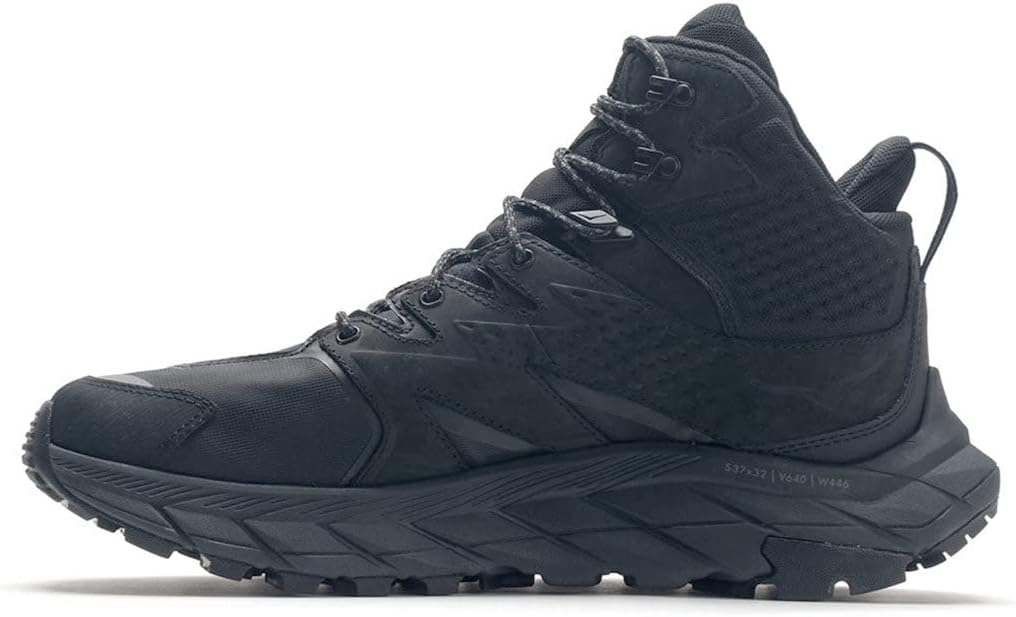
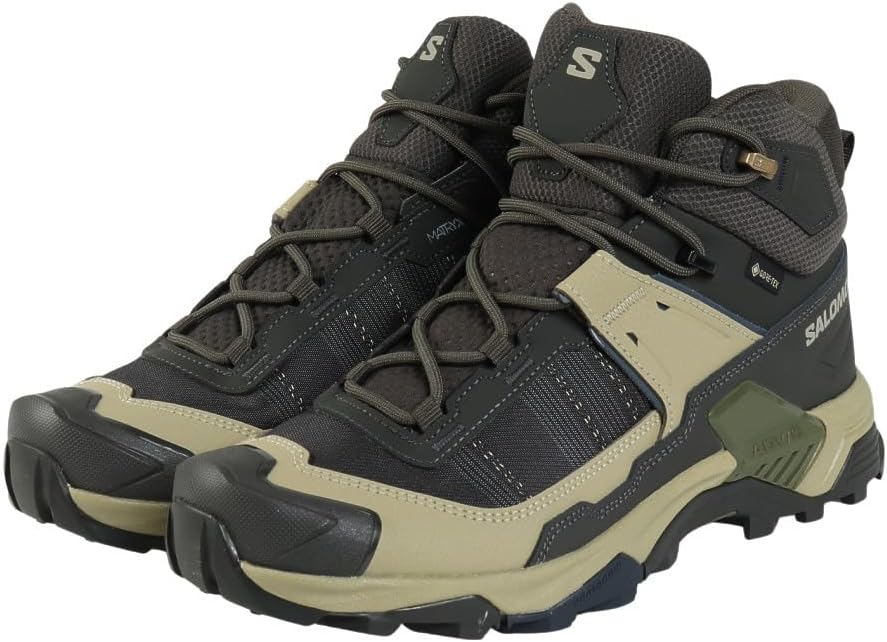
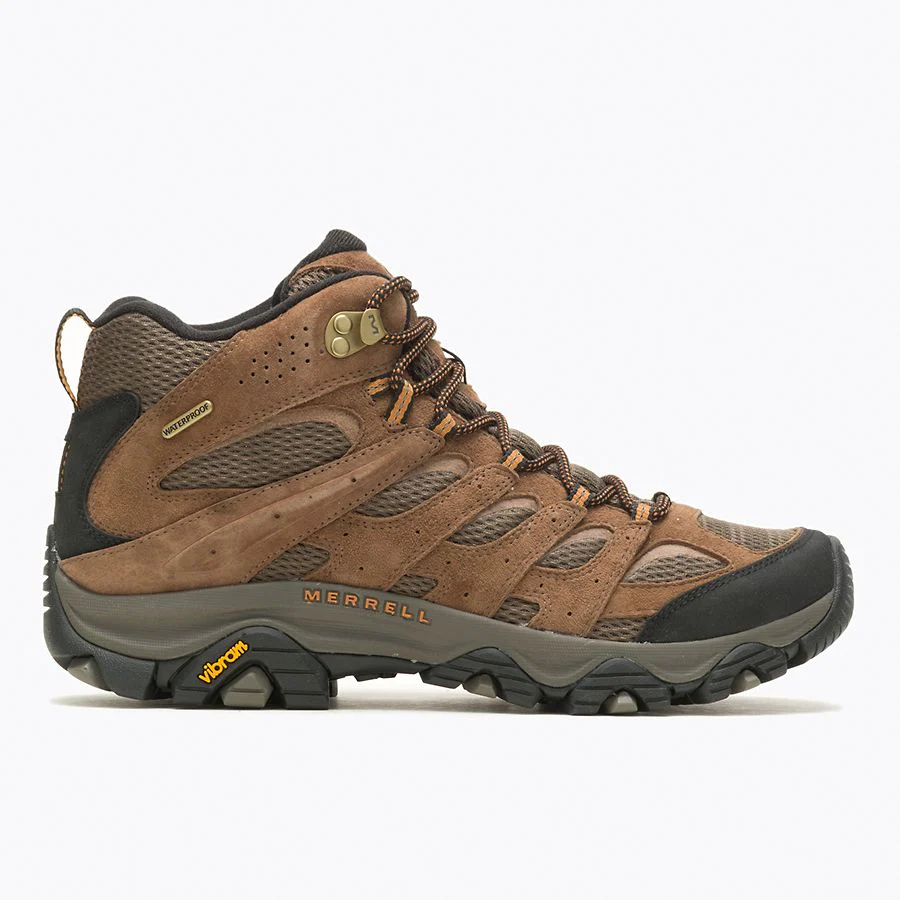
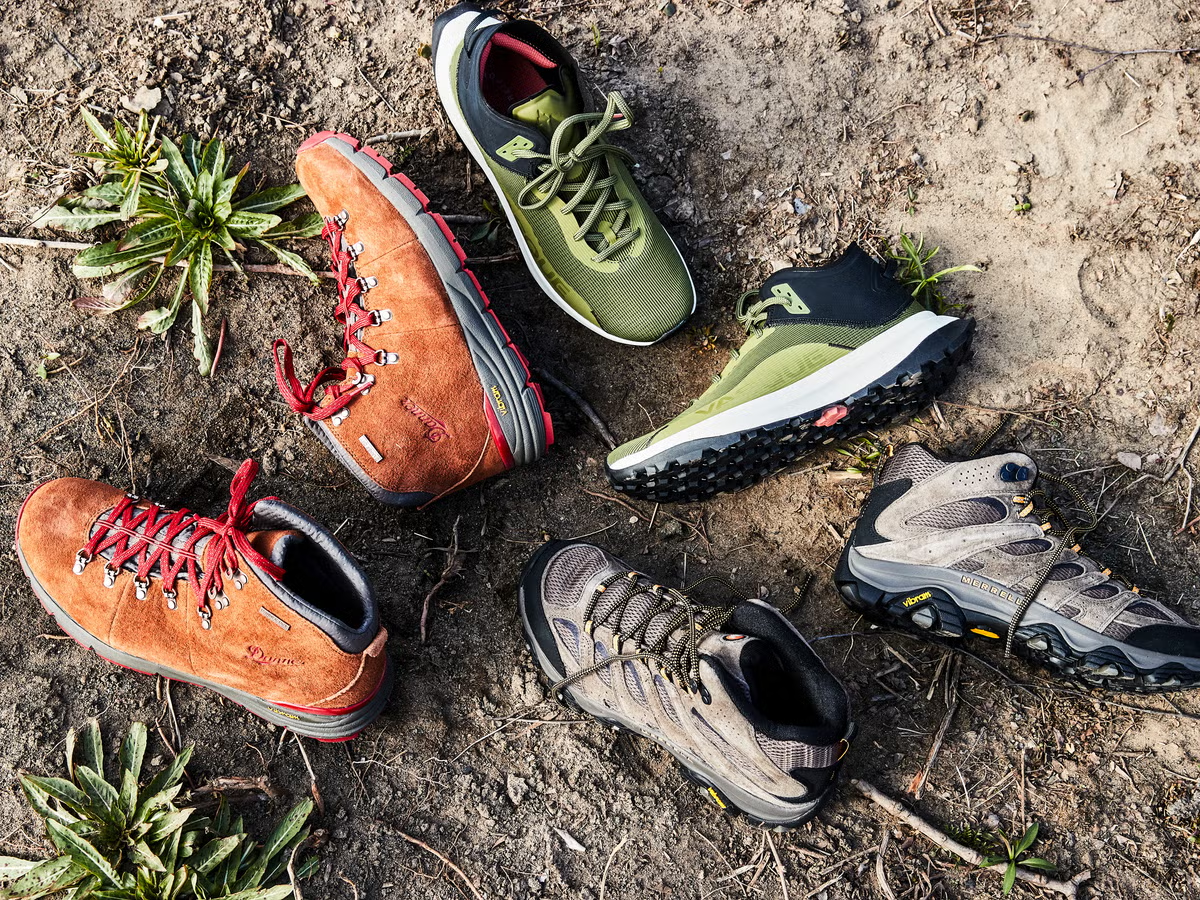
There's a third option worth mentioning: the low-cut hiking shoe. Think Salomon X Ultra, Merrell Moab 3, HOKA Anacapa. These are essentially trail shoes built with the durability and underfoot protection of a boot, minus the ankle collar.
The biggest difference between trail runners and hiking shoes is that low hiking shoes, which tend to be heavier and more durable, are only really meant for walking — while trail runners can be used for both walking and running.
For a lot of day hikers and beginner backpackers, the hiking shoe is the sweet spot. You get real traction, legitimate underfoot protection from rocks and roots, waterproof options that don't run as hot as full boots, and a weight that lands between a trail runner and a full boot. If you're not sure which category you fall into, start here.
The Bottom Line
The hiking footwear world has spent years telling beginners they need heavy, waterproof, ankle-high boots to be safe on trail. For most hikes, most conditions, and most people — that's just not true.
Trail shoes are lighter, faster to dry, kinder on your knees, don't require break-in time, and actually give your ankles a chance to get stronger. They're not a compromise. They're the choice that 87% of Appalachian Trail thru-hikers end up making.
But boots aren't wrong, either. They're the right tool when the job demands them: serious cold, serious weight, serious terrain.
Know your conditions. Match your footwear to the actual hike — not to what you assumed you needed because that's what your dad always wore.
Your feet will thank you somewhere around mile 8.
Looking for your next pair? Browse our full lineup of hiking boots at Trailwise Gear. Not sure about sizing or fit? Check out our guide on how to choose hiking boots — because the right shoe in the wrong size is still the wrong shoe.
Products We Recommend
Written by
Sarah Chen
Gear Analyst & Writer · Trailwise Gear
Sports science graduate with a background in biomechanics. Brings data-driven analysis to gear testing — quantifying comfort, weight distribution, and material performance.
Ultramarathon Runner · Alpine Mountaineer
Meet the full team →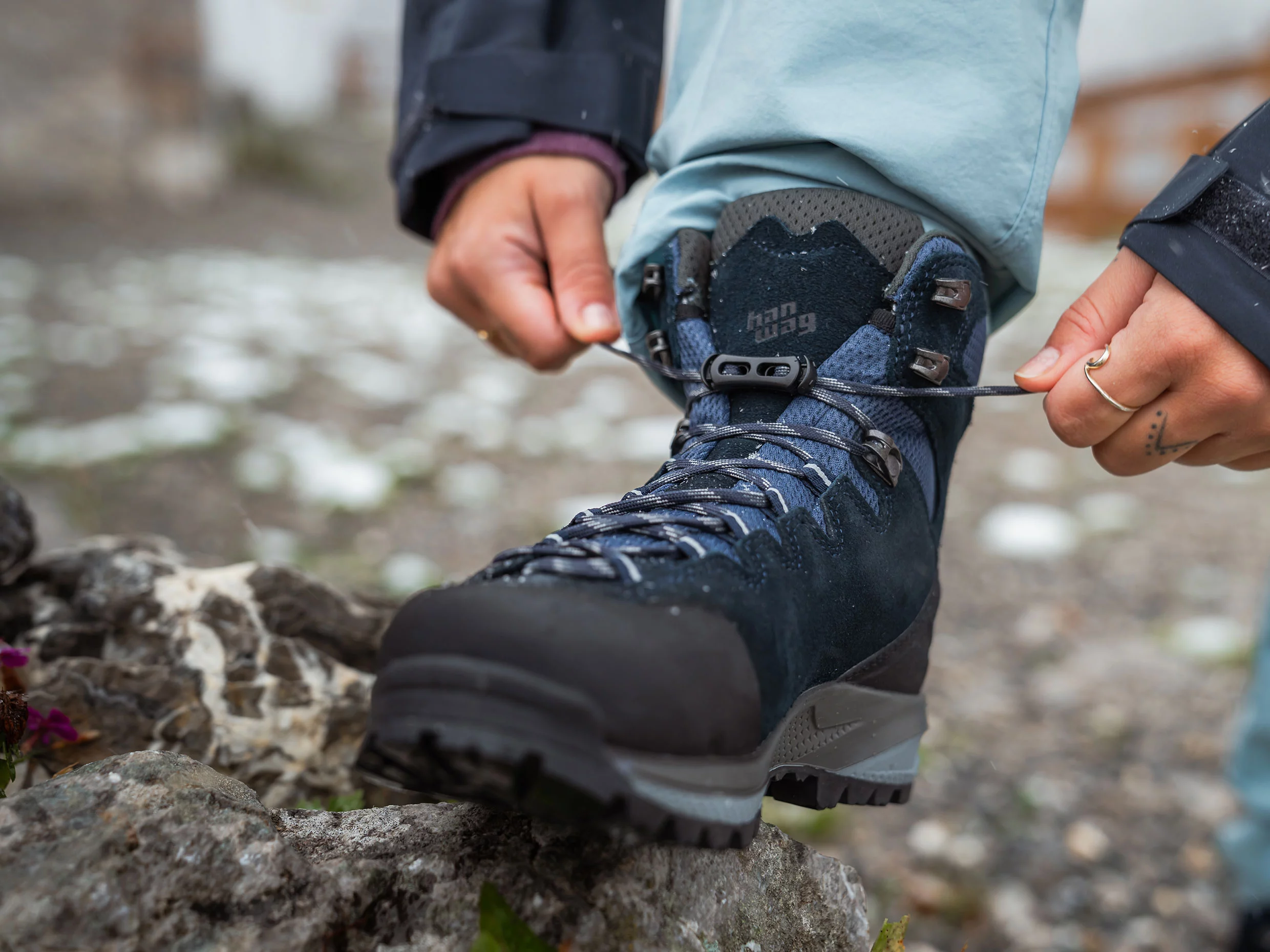
Find the Best Gear
Browse our expert-ranked gear categories.