What to Wear Hiking: The Complete Clothing Guide for Every Season
The proven layering system for hiking applies across seasons and conditions — from summer sun to winter snow. Here's exactly what to wear and why.
Key Takeaways
- The Foundation: The Layering System: Every hiking clothing decision flows from one concept: layering.
- What to Wear Hiking in Summer: Summer hiking is primarily about heat management and sun protection.
- What to Wear Hiking in Spring and Fall: Shoulder seasons are the most variable hiking conditions you'll encounter.
- What to Wear Hiking in Winter: Winter hiking requires a more serious commitment to layering, materials, and planning.
Hiking clothing is one of those areas where beginners consistently overthink or underthink — usually both at different times. They either show up in jeans and a cotton hoodie or they spend $800 on technical gear before their first hike.
The right answer is simpler than either extreme. There's a proven system for dressing for hiking that applies across seasons and conditions, works for everyone from day hikers to thru-hikers, and lets you build your kit gradually as your needs become clear.
Here it is.
The Foundation: The Layering System
Every hiking clothing decision flows from one concept: layering. Instead of wearing one heavy garment that tries to do everything, you wear multiple lighter layers that each do one thing well. This gives you granular control over your comfort as temperature, exertion, and weather conditions change throughout a hike.
A typical 3-season layering system:
Layer 1 — Base Layer: The clothing directly against your skin. Its job is moisture management — pulling sweat away from your body and allowing it to evaporate. This layer should never be cotton.
Layer 2 — Mid Layer: Insulation. This layer traps body heat and keeps you warm when you're not generating heat from exertion. A fleece jacket or lightweight synthetic puffy fills this role.
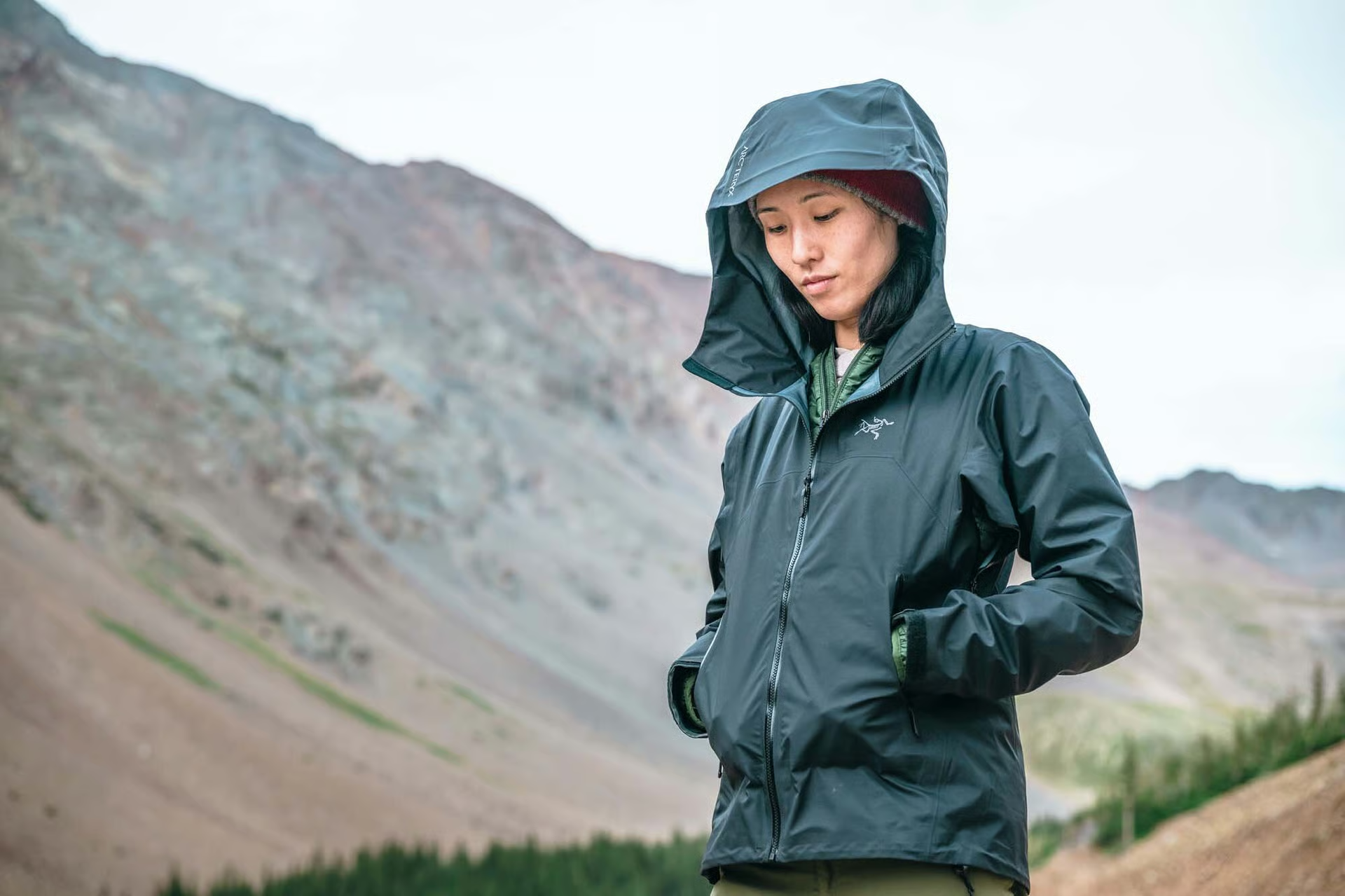
Layer 3 — Shell Layer: Protection from wind, rain, and external moisture. A rain jacket or hardshell is your outer defense against the elements.
The crucial thing about layering is that you're constantly adding and removing layers based on conditions. Climbing uphill in sun? Strip down to your base layer. Stopping for lunch on a ridge? Add the mid and shell. For the full deep-dive, read the layering system for hikers guide.
What to Wear Hiking in Summer
Summer hiking is primarily about heat management and sun protection. The dangers are heat exhaustion, dehydration, and sunburn — not cold.
Base layer: Go lightweight and high-breathability. A moisture-wicking short-sleeve shirt in polyester or merino wool allows airflow while pulling sweat away. Merino wool has a hidden advantage in summer: it regulates temperature in both directions, staying cooler against the skin while resisting odor far better over multi-day trips.
Bottoms: Lightweight hiking shorts or convertible pants (zip-off to shorts) are the standard. Look for fabrics with stretch — you'll be stepping over rocks, climbing, and crouching. Avoid denim entirely.
Sun protection: In exposed alpine terrain, a long-sleeve sun shirt provides more reliable protection than constantly reapplying sunscreen. UPF 50+ rated shirts block over 97% of UV radiation.
Always pack even on hot days: a light rain jacket, an extra insulating layer, and sun protection. Mountain weather changes within hours — an afternoon thunderstorm at 10,000 feet is standard summer weather in the Rockies and Cascades.
What to Wear Hiking in Spring and Fall
Shoulder seasons are the most variable hiking conditions you'll encounter. Morning temperatures can be below freezing while afternoon highs reach 65°F. These are the conditions the layering system was designed for.
Base layer: A medium-weight merino wool or synthetic long-sleeve base layer is the starting point. Having sleeves gives you more versatility as temperatures fluctuate.
Mid layer: Your mid layer earns its pack space most in shoulder seasons. A fleece (Patagonia R1, Arc'teryx Covert) provides warmth without bulk and breathes well enough to wear during moderate activity. A lightweight synthetic puffy packs small and provides excellent warmth-to-weight ratio. Down is warmer for its weight but loses insulating ability when wet — synthetic is the safer choice for spring conditions.
Bottoms: Long pants are the right choice for most shoulder-season hiking. Softshell pants provide warmth, wind resistance, and stretch.
Don't skip the rain layer: In spring especially, rain is frequently on the menu. A lightweight packable rain jacket — the Marmot PreCip Eco weighs under 9 oz stuffed into its own pocket — adds essentially no pack burden and transforms a miserable wet afternoon into a manageable one.
What to Wear Hiking in Winter
Winter hiking requires a more serious commitment to layering, materials, and planning. Getting cold and wet in winter conditions is a genuine safety risk, not just a comfort issue.
Base layer: Go with mid-weight or heavyweight merino wool against your skin. Merino keeps you warmer than synthetic fabrics of equivalent weight when dry, and maintains more insulating ability than synthetic when slightly damp.
Mid layer: A substantial fleece or heavier synthetic puffy handles the bulk of your warmth. Many winter hikers run two mid layers: a heavier fleece worn while inactive and a lighter insulating piece worn during active hiking periods to prevent overheating.
Shell: A waterproof hardshell — not just a rain jacket — is essential for winter hiking. Winter precipitation demands more sustained waterproofing than a summer afternoon shower. Gore-Tex 3-layer constructions provide the reliability winter conditions demand. Browse rain gear options for hardshell recommendations.
Extremity protection: Hands, feet, and head lose heat fastest. Pack insulated waterproof gloves, a wool hat or fleece balaclava, gaiters for deep snow, and a neck gaiter.
The One Thing You Should Never Wear Hiking: Cotton
This bears its own section because it's the most repeated, most important rule in all of hiking clothing — and the one most frequently violated by beginners.
Cotton clothing — including denim, cotton t-shirts, and cotton hoodies — absorbs moisture and holds it. When you sweat, cotton stays wet. When you get wet from rain, cotton stays wet. Wet cotton has virtually no insulating properties, which means a cotton hoodie that felt warm and comfortable at the trailhead becomes cold, heavy, and potentially dangerous once you're sweating hard in changing weather conditions.
The outdoor community summarizes this risk with: "Cotton kills." Synthetic and merino alternatives exist at every price point. There is no scenario where cotton is the better hiking choice.
What to Wear Hiking: Quick-Reference by Season
| Season | Base Layer | Mid Layer | Shell | Bottoms | Extras |
|---|---|---|---|---|---|
| Summer | Lightweight synthetic or merino short-sleeve | Light fleece or packable puffy | Ultralight rain jacket | Shorts or convertible pants | Sun hat, UPF shirt, sunglasses |
| Spring/Fall | Mid-weight merino or synthetic long-sleeve | Fleece or synthetic puffy | Rain jacket | Hiking pants | Gloves, buff |
| Winter | Heavyweight merino or synthetic | Heavy fleece + light puffy | Hardshell | Insulated pants or softshell | Insulated gloves, hat, gaiters, microspikes |
Building Your Hiking Wardrobe on a Budget
You don't need to buy everything at once. Here's the priority order for building a hiking clothing kit:
- Non-cotton base layers (athletic shirts and shorts you may already own)
- A packable rain jacket (~$50–$130 — the most impactful single item)
- Merino or synthetic hiking socks (~$15–$25/pair)
- A mid-layer fleece (~$50–$150)
- Dedicated hiking pants or shorts (~$60–$120)
- Sun protection clothing (as your trails become more exposed)
- Winter-specific gear (when you start pursuing cold-weather hikes)
Products We Recommend
Written by
Marcus Osei
Founder & Lead Reviewer · Trailwise Gear
Former wilderness guide with 15 years of expedition experience across Patagonia, the Rockies, and the Himalayas. Has personally tested over 400 pieces of gear in the field.
PCT Section Hiker · Appalachian Trail Thru-Hiker
Meet the full team →
Find the Best Gear
Browse our expert-ranked gear categories.