Water Filter vs. Purifier: Which Do You Need?
Filters remove bacteria and protozoa. Purifiers also kill viruses. For most hikers in North America, a filter is all you need — here's exactly how to decide.
Key Takeaways
- The Core Difference — What Filters and Purifiers Actually Do: The technical distinction between a filter and a purifier comes down to what they're capable of removing from water — specifically, the size of pathogens they can catch.
- Understanding the Threats — Giardia, Crypto, Bacteria, and Viruses: Giardia is the most commonly reported parasitic illness in the United States.
- Filter Types — What's Actually Available: Squeeze filters like the Sawyer Squeeze and Sawyer Mini are the most widely used backcountry filters.
- Purifier Options — When You Need More Than a Filter: UV purifiers like the SteriPen use ultraviolet light to destroy the DNA of bacteria, protozoa, and viruses, rendering them incapable of reproducing.
Here's the short answer: filters remove bacteria and protozoa. Purifiers also kill viruses. For most hikers in the United States and Canada, a filter is all you need. For international travel or destinations with high human impact on water sources, a purifier is the safer choice.
That's the core distinction — but understanding why it matters, and which specific product makes sense for your hiking style, takes a little more context. Clear-looking backcountry water can still carry pathogens that will ruin your trip for weeks. A two-ounce filter you'll actually carry and use is worth far more than a heavier, more capable purifier left in the car.
This guide breaks down exactly what each treatment type removes, what the realistic threats are for different destinations, and which options are worth considering at every price and weight point.
The Core Difference — What Filters and Purifiers Actually Do
The technical distinction between a filter and a purifier comes down to what they're capable of removing from water — specifically, the size of pathogens they can catch.
Backcountry water filters work by physically forcing water through a membrane with extremely small pores — typically 0.2 microns in diameter. A human hair is about 70 microns wide. At 0.2 microns, the membrane is small enough to trap sediment, protozoan cysts, and bacteria while still allowing water molecules through.
A quality 0.2-micron filter reliably removes protozoa (Giardia lamblia and Cryptosporidium — the primary waterborne threats in backcountry North America) and bacteria (E. coli, Salmonella, Campylobacter). Here's where the filter vs. purifier distinction becomes critical: viruses are dramatically smaller than bacteria — most waterborne viruses measure between 0.02 and 0.5 microns. At that size, they slip right through even the tightest filter membranes. Waterborne viruses that cause illness include Norovirus, Rotavirus, and Hepatitis A. A filter does nothing to remove them.
For most backcountry hiking in the US and Canada, a filter is sufficient. Viruses are primarily spread through human fecal contamination, and in remote wilderness areas with low human traffic, viral contamination of water sources is rare. The dominant threats — Giardia and Cryptosporidium — are protozoa, which filters remove reliably.
Understanding the Threats — Giardia, Crypto, Bacteria, and Viruses
Giardia is the most commonly reported parasitic illness in the United States. Symptoms typically appear one to three weeks after exposure — which means you're often back from your trip before you feel sick. Symptoms include persistent watery diarrhea, stomach cramps, bloating, nausea, and significant fatigue. Untreated, symptoms can last two to six weeks.
Cryptosporidium (Crypto) is particularly stubborn because it forms protective cysts that are resistant to standard chlorine treatment — chemical tablets alone won't reliably kill it. Symptoms appear two to ten days after exposure and typically last one to two weeks. Both parasites are present in virtually all surface water in North America. Never drink untreated surface water.
Bacterial contamination from E. coli, Salmonella, and similar pathogens is a genuine risk in backcountry water, particularly near livestock grazing areas and popular campsites. Standard 0.2-micron filters catch most bacteria reliably.
Viruses spread primarily through human fecal contamination. The virus risk increases meaningfully in crowded backcountry areas and becomes the dominant concern in developing countries, where inadequate sanitation infrastructure means viral contamination of water is widespread and expected.
- Giardia and Crypto: primary threats in North American wilderness — removed by filters
- Bacteria: common but filterable with any 0.2-micron filter
- Viruses: low risk in remote US/Canada wilderness, high risk internationally
- Clear water is not safe water — always treat backcountry water
Filter Types — What's Actually Available
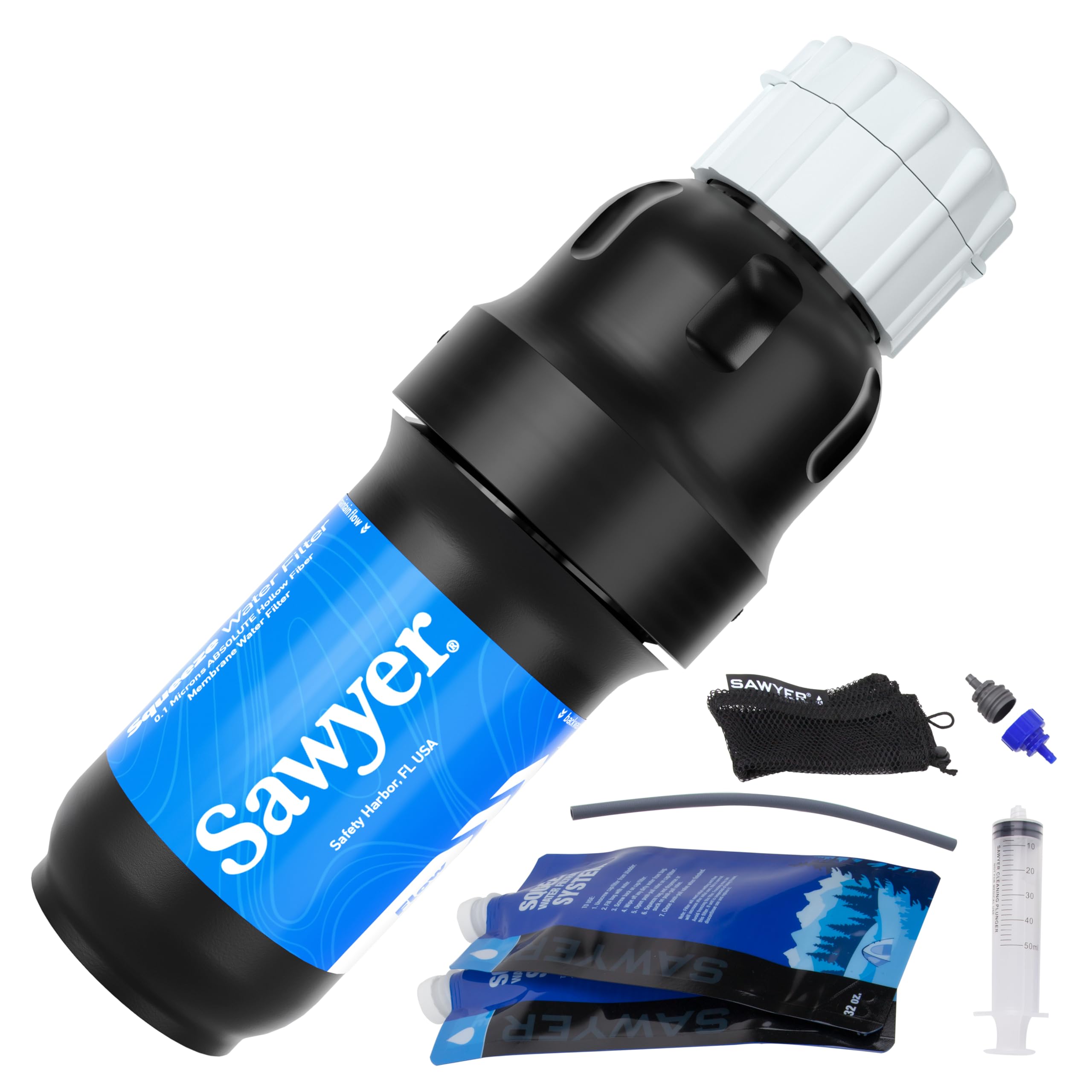
Squeeze filters like the Sawyer Squeeze and Sawyer Mini are the most widely used backcountry filters. Fill a flexible reservoir with source water, attach the filter, and squeeze water through. They're lightweight (the Sawyer Squeeze weighs about 3 ounces), affordable, and rated to filter up to 100,000 gallons with proper maintenance. The Sawyer Squeeze has become essentially the default recommendation for beginner backpackers.
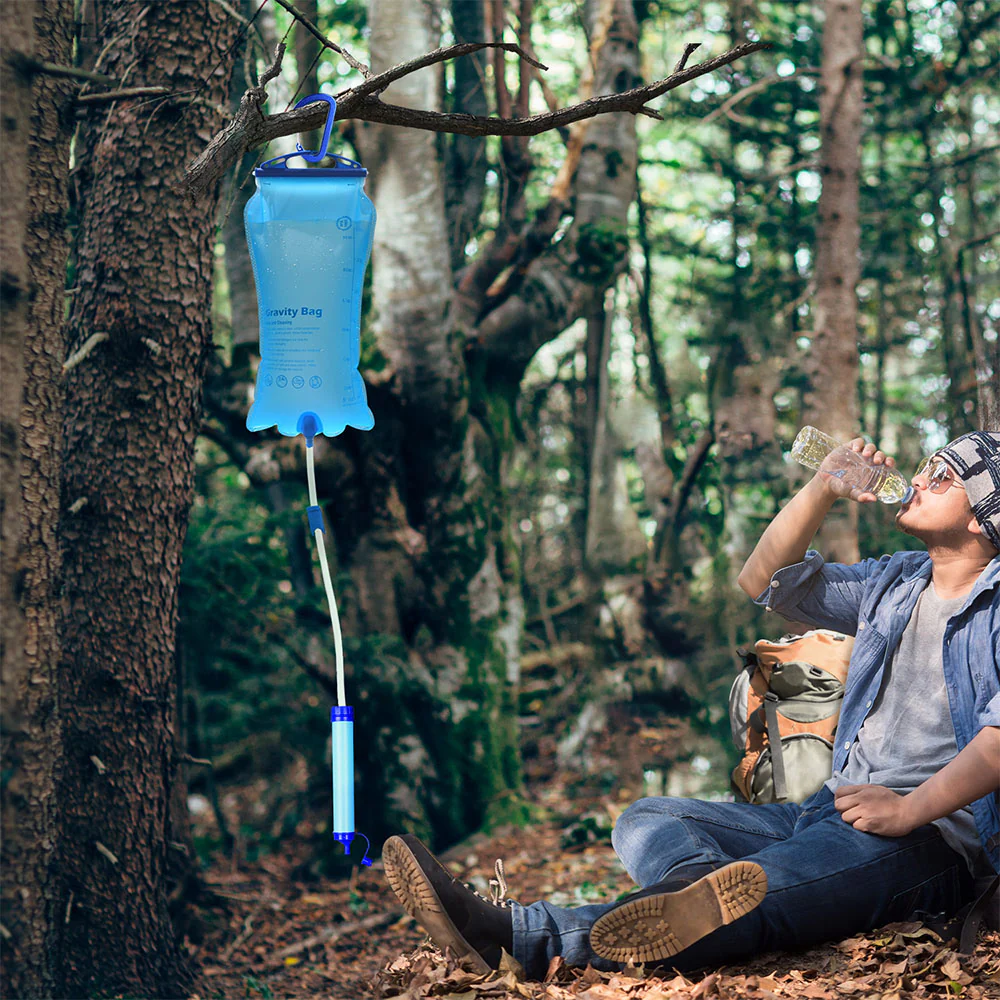
Gravity filters use a reservoir hung from a tree branch to push water through the filter without any effort. Particularly well-suited for groups and base camps where you need to process large volumes of water. The trade-off: they're slower, require a suitable hanging point, and take up more pack space.
Pump filters like the MSR MiniWorks EX have been the standard for backcountry use for decades — highly reliable, work in shallow water sources, and field-tested over millions of miles. The main downside is time and effort. For most modern hikers, squeeze or gravity filters have largely replaced pumps.
Straw-style filters like the LifeStraw let you drink directly from a water source through the filter element. Extremely lightweight and useful as emergency backup in a day hike kit — but you can't fill a bottle for later, and most straw filters don't address viruses. A useful backup item, not a replacement for a primary filter on any serious trip.
Purifier Options — When You Need More Than a Filter
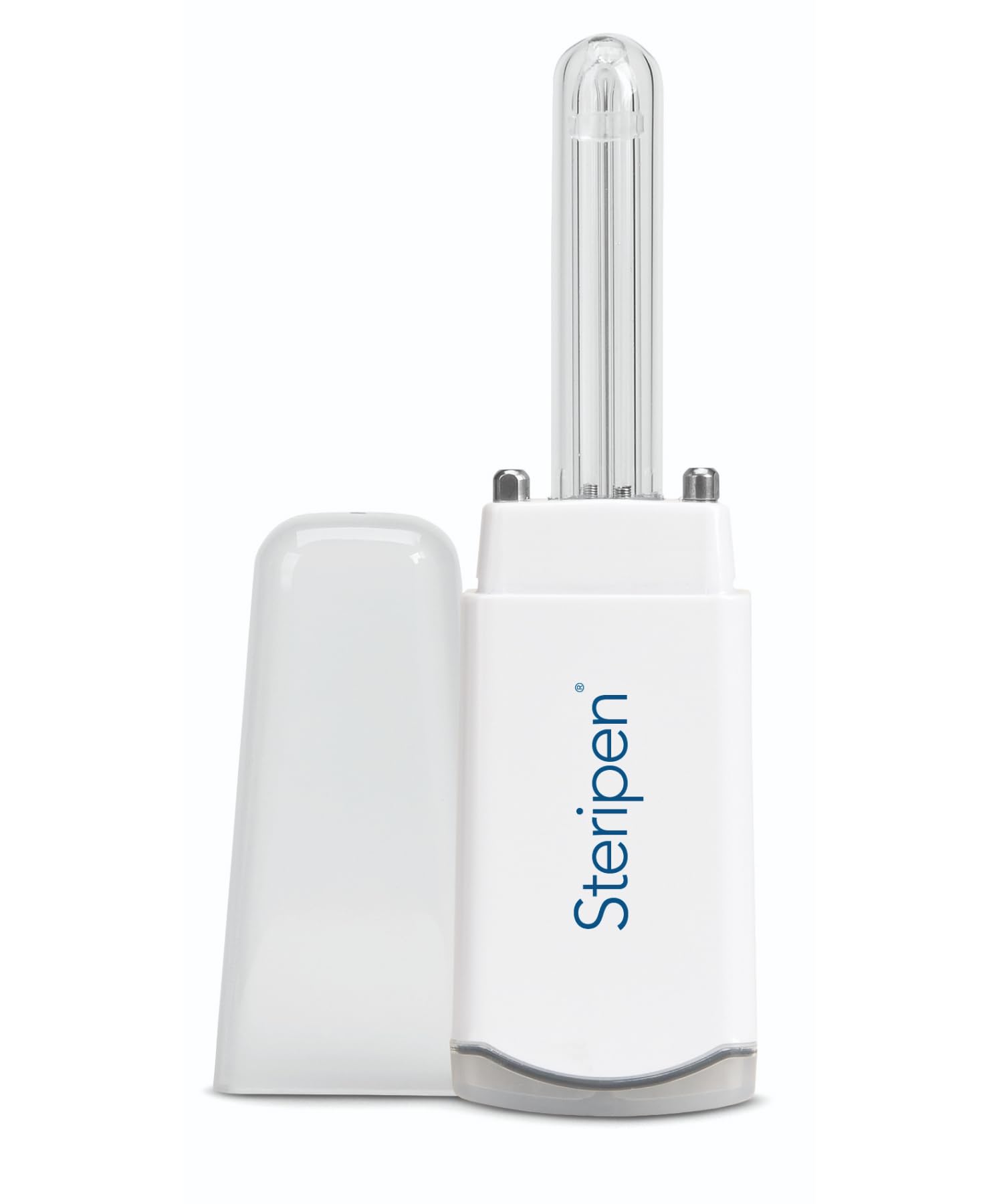
UV purifiers like the SteriPen use ultraviolet light to destroy the DNA of bacteria, protozoa, and viruses, rendering them incapable of reproducing. The process takes about 90 seconds per liter and leaves no chemical taste. The critical limitation: UV light can't penetrate turbid (cloudy or silty) water effectively. Pre-filtering sediment is essential before UV purification when water isn't clear. UV purifiers also depend on batteries.
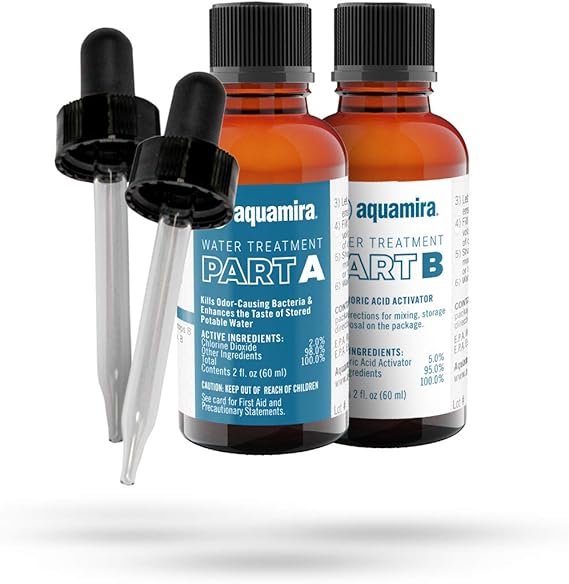
Chemical treatments — including chlorine dioxide drops (Aquamira), iodine tablets, and chlorine tablets — are the lightest and most packable treatment option. Aquamira drops weigh less than two ounces, treat dozens of liters, and cost only a few dollars. Chlorine dioxide addresses bacteria, protozoa, and viruses, making it a true purifier. Important: iodine tablets are not effective against Cryptosporidium — only chlorine dioxide covers the full range. Chemical treatment is excellent as a backup to a mechanical filter on any trip where viral contamination is possible.
Boiling is the most reliable and equipment-free treatment method. Bringing water to a rolling boil for one minute (three minutes above 6,500 feet) kills bacteria, protozoa, and viruses completely. The practical limitation is time and fuel — most backcountry travelers carry a filter for routine use and reserve boiling for situations where the filter is damaged or unavailable.
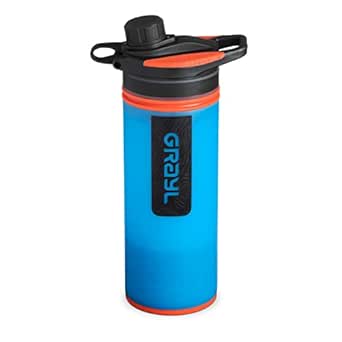
The Grayl GeoPress combines filtration with purification to remove bacteria, protozoa, viruses, heavy metals, and chemicals in a single press. Significantly heavier (15 ounces) and more expensive ($100), but for international travel or anyone who wants maximum protection without thinking about treatment method combinations, it's the most capable portable solution available.
Making the Right Choice for Your Trip
The decision tree is simple.
For backcountry US/Canada day hiking and backpacking: a 0.2-micron squeeze or gravity filter covers Giardia, Crypto, and bacteria — the realistic threats in North American wilderness. Add Aquamira drops as a backup if you want virus coverage without weight penalty.
For crowded trails, popular destinations, or areas with known hygiene problems near water: consider adding chemical treatment as a purifier step after filtering, or carry a UV purifier for fast, convenient virus coverage.
For international travel or destinations with poor sanitation: use a full purifier. The Grayl GeoPress is the most convenient all-in-one; a UV purifier paired with a squeeze filter handles most situations effectively.
For ultralight backpackers, the guide on ultralight backpacking tips covers how experienced hikers weigh every gear choice — and water treatment is no exception. A Sawyer Mini weighs less than two ounces and handles the same threats as its heavier counterparts.
The Bottom Line
For the overwhelming majority of hikers heading into North American wilderness, a quality 0.2-micron squeeze filter is the right tool. It's lightweight, reliable, handles every realistic threat you'll encounter, and requires almost no effort to use.
Understand the one thing it doesn't do — address viruses — and carry chemical drops as a backup for situations where that matters. For international travel or truly uncertain water sources, step up to a dedicated purifier.
Never drink untreated backcountry water. Clear water is not safe water. A two-ounce filter is cheap insurance against a multi-week illness that will follow you home from the trail.
Products We Recommend
Written by
Sarah Chen
Gear Analyst & Writer · Trailwise Gear
Sports science graduate with a background in biomechanics. Brings data-driven analysis to gear testing — quantifying comfort, weight distribution, and material performance.
Ultramarathon Runner · Alpine Mountaineer
Meet the full team →
Find the Best Gear
Browse our expert-ranked gear categories.