Bear Safety on the Trail: What to Do Before, During, and After an Encounter
Fear of bears keeps too many people off great trails. Most encounters are preventable — here's how to store food, carry bear spray, and what to actually do if you meet a bear.
Key Takeaways
- Prevention — Making Noise and Understanding What Attracts Bears: Bears have an extraordinary sense of smell — grizzlies can detect scent from miles away, making them far more likely to smell you long before you see them.
- Food Storage — The Most Important Thing You Can Do: Improperly stored food is the root cause of most problematic bear encounters.
- Bear Spray — Your Best Line of Defense: Bear spray is the single most effective tool for deterring an aggressive bear — more effective, statistically, than firearms.
- If You Encounter a Bear: The most important rule: do not run.
Fear of bears keeps too many people off great trails. It shouldn't. Bear attacks are genuinely rare — you're statistically far more likely to be struck by lightning than seriously injured by a bear in North America. But that doesn't mean you should hike into bear country unprepared.
The reality is that most bear encounters are preventable. Bears aren't hunting hikers. They're looking for food, avoiding threats, and going about their lives. The handful of encounters that do escalate almost always involve a surprised bear, improperly stored food, or someone who didn't have bear spray.
This guide gives you everything you need to hike confidently in bear country: how to prevent encounters in the first place, how to store food correctly, how to carry and deploy bear spray, and exactly what to do if you come face to face with a bear on the trail.
Prevention — Making Noise and Understanding What Attracts Bears
Bears have an extraordinary sense of smell — grizzlies can detect scent from miles away, making them far more likely to smell you long before you see them. In the vast majority of cases, a bear that knows a human is approaching will simply leave. The problem starts when bears are surprised at close range, or when they've been conditioned to associate humans with food.
The single most effective thing you can do to prevent a surprise encounter is make noise — consistent, audible noise that carries far enough ahead to give bears time to clear the trail. Talk loudly with your hiking partners. Call out "Hey bear!" at regular intervals, especially approaching blind corners, dense brush, or stream crossings.
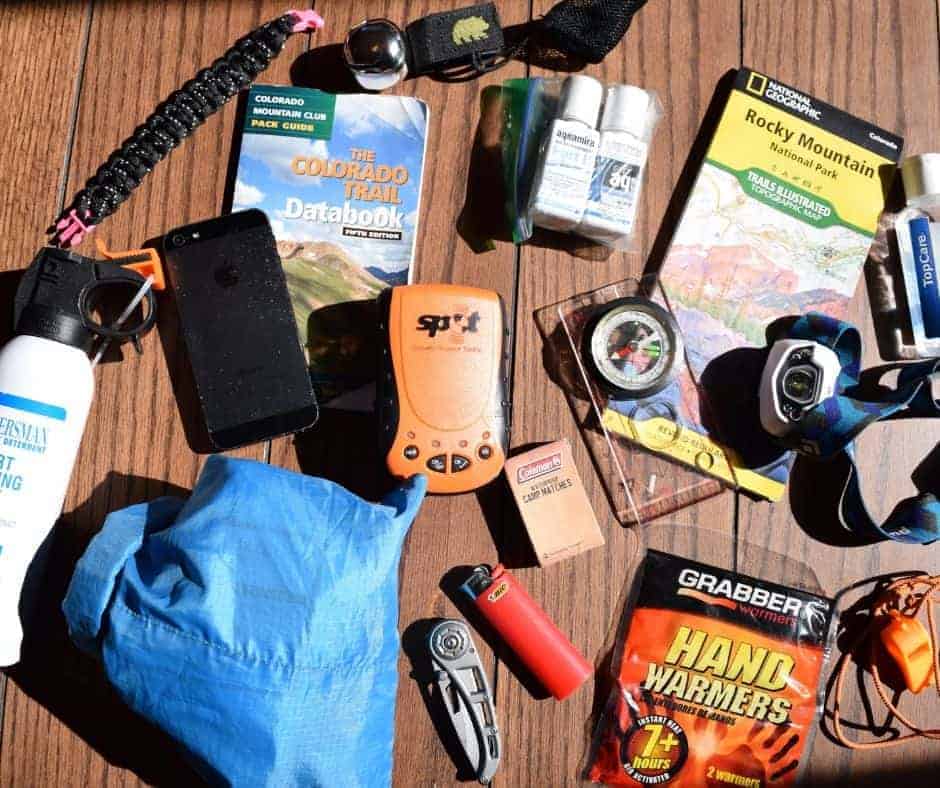
Bear bells are not sufficient. They're not loud enough to warn a bear at any useful distance. A loud human voice is the most effective warning. Hiking in groups of three or more significantly reduces your risk.
Bears are also attracted to anything with a strong scent: cooking odors, food wrappers, sunscreen, insect repellent, toothpaste. Trailhead kiosks and ranger stations often post current bear activity — check those boards before you set out. For remote areas, reviewing your trail map and knowing your exits is part of smart wilderness preparedness.
Food Storage — The Most Important Thing You Can Do
Improperly stored food is the root cause of most problematic bear encounters. A bear that gets a food reward from a hiker or camper will return — and will teach its cubs to do the same. Proper food storage protects you, future hikers, and the bears themselves.
In bear country, your campsite should be organized into three separate zones, each at least 200 feet apart: where you sleep, where you cook and eat, and where you store food and scented items. Cook and eat your meals well away from your tent. Change out of your cooking clothes before sleeping. Never bring food, wrappers, or scented items into your tent.
Bear canisters are hard-sided containers that bears can't open. Many national parks require them. Bear hangs require the bag to hang at least 12 feet off the ground, 6 feet out from the trunk, and 6 feet below any branch. Bear boxes are fixed metal food lockers at designated campsites — use them when available.
Everything that has a smell needs to go into your bear storage — not just food. This includes: empty food packaging, cooking pots, toothpaste, lip balm, sunscreen, insect repellent. The guide on Leave No Trace principles covers pack-it-out practices that directly reduce bear activity on busy trails.
- Store all food and scented items in your bear protection system
- Cook and eat at least 200 feet from your sleeping area
- Change out of cooking clothes before sleeping
- Pack out all food waste — do not bury it
- Never bring food or scented items into your tent
Bear Spray — Your Best Line of Defense
Bear spray is the single most effective tool for deterring an aggressive bear — more effective, statistically, than firearms. A 2008 study found that bear spray stopped undesirable bear behavior in over 92% of cases, with 98% of people escaping uninjured.
Bear spray is only useful if you can access it in seconds. Carry it in a hip holster clipped to the outside of your pack — not buried inside it. To deploy: remove the safety clip, aim slightly downward toward the approaching bear, and begin spraying when the bear is within 60 feet. Keep spraying until the bear changes direction. Check wind direction — spray blown back into your face will affect you, not the bear.
Never pre-spray your tent, gear, or clothing. Bear spray is not a repellent — residual capsaicin on objects can actually attract curious bears.
Bear spray is a key addition to the standard day hike packing list for anyone hiking in bear habitat.
If You Encounter a Bear
The most important rule: do not run. Running triggers a bear's chase instinct — and you cannot outrun a bear. Grizzlies can reach 35 miles per hour.
If you see a bear before it sees you, back away quietly. If the bear has already spotted you, speak calmly so it knows you're human. Wave your arms slowly to appear larger. Give the bear a clear escape route — never corner a bear or get between it and its cubs or food.
Bears often bluff charge — a burst toward you that stops short or veers off. Hold your ground. Fleeing will almost certainly convert a bluff into a real pursuit. A real charge is faster and lower to the ground. Deploy bear spray when the bear is within 60 feet.
If a grizzly charges defensively, play dead: drop face-down, keep your pack on, clasp your hands behind your neck, and spread your legs. Stay completely still. For a black bear attack, do NOT play dead — fight back aggressively. For any bear attacking you in your tent, fight back with everything you have regardless of species.
For a complete safety kit checklist, see our safety gear rankings.
Black Bears vs. Grizzlies — Know the Difference
Black bears are found across most of North America. They're smaller, generally less aggressive, and more likely to flee when confronted. Despite their name, black bears can be cinnamon, blonde, or brown.
Grizzly/brown bears are found primarily in Alaska, northern Canada, and specific areas of the lower 48 — including Yellowstone and Glacier National Park. They're larger and more powerful. The most reliable field distinction: grizzlies have a prominent shoulder hump and a slightly dished facial profile; black bears have a straight nose-to-forehead line.
Before hiking in any area, check local regulations and trailhead postings. Bear canister requirements, spray rules, and area closures vary by park and change seasonally.
Preparation is straightforward: make consistent noise, store food correctly, carry bear spray, and know the basic encounter rules. Bear spray is available at most outdoor retailers and sporting goods stores — look for EPA-registered sprays with at least 7.9 oz capacity and a minimum 1% capsaicin concentration.
Products We Recommend
Written by
Marcus Osei
Founder & Lead Reviewer · Trailwise Gear
Former wilderness guide with 15 years of expedition experience across Patagonia, the Rockies, and the Himalayas. Has personally tested over 400 pieces of gear in the field.
PCT Section Hiker · Appalachian Trail Thru-Hiker
Meet the full team →
Find the Best Gear
Browse our expert-ranked gear categories.